


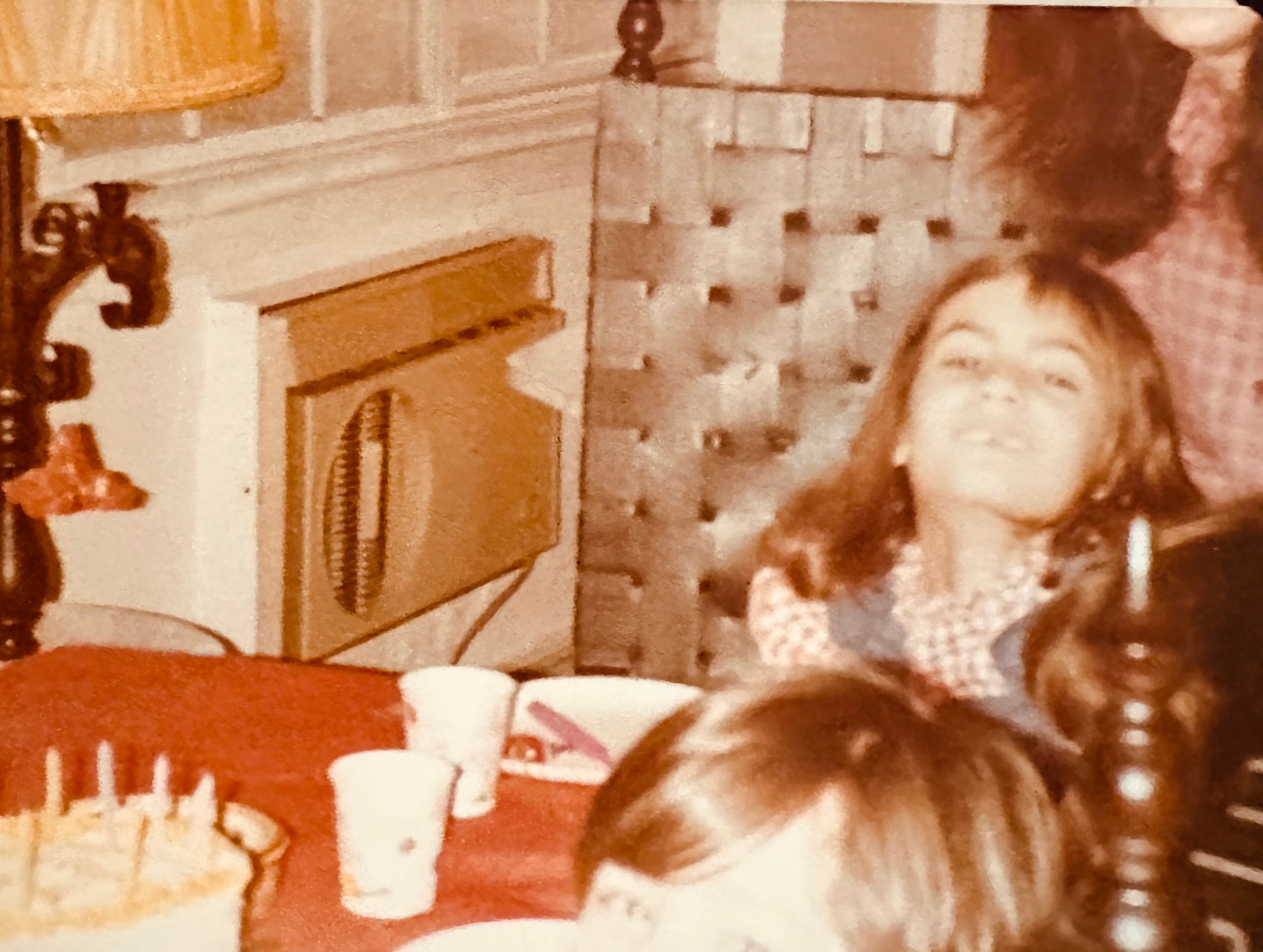
Like many kids of the 80s, I used to hop off the school bus each day and make the mad dash home to watch General Hospital, sitting on the couch beside my mom. My friends were loyal to whichever network of soaps their parents watched, and in my house, it was ABC for the triumvirate of All My Children, One Life to Live, and General Hospital. As an impressionable 8-year-old, I followed the affairs, switched births, and wealthy families. I was confused when characters were angry that two people “slept together,” which seemed innocent enough—after all, I slept beside my brother in motels on family trips. At one point, I asked my mom what the big deal was. Mom told me the truth; she never minced words.
Something about General Hospital shifted around 1980.
Suddenly, the soap was part thriller, part comedy, part sci-fi adventure. This mirrored the hour-long shows I devoured in prime time: the “character-driven action-adventures” with quirky protagonists, from The A-Team to Remington Steele. The snappy dialogue, resourceful heroes, and suspense kept me glued. They also provided happiness while my parents fought, and while school bullies made me want to hide.
Like the night-time thrillers, General Hospital provided riveting storylines for me to lose myself in: Lovers Luke and Laura went on the run each summer from various crime families. The pair had great chemistry and clever dialogue. Laura was smart, and delivered her witticisms with a shy smile. My mom and I bonded every day as we talked about the show. It even gave me something in common with the popular kids (possibly the only thing): They talked about the show, too, but mainly about their crushes on stars John Stamos and Rick Springfield. I found both actors handsome, but didn’t have crushes because I didn’t know whether they were kind in real life (clearly I thought about everything way too much).
After the death last weekend of actor Anthony Geary—who played Luke—my social media feed was a frenzy of memories from other fans who talked about watching the show daily with their parents, classmates, or partners, because it was unavoidable: Luke and Laura’s November 1981 wedding drew 30 million viewers.
I’ve been watching old episodes for a year on YouTube, particularly since my mom died 18 months ago and we had spent hours glued to the program. To my surprise, the old episodes hold up. I’m still charmed by the dialogue (the writers will probably never get enough credit).
Both Luke and Laura were funny, resourceful, and rescued each other in unusual ways. Between Laura’s shy strength and Luke’s cautious energy, the chemistry was palpable.
Inevitably, each discussion in person or social media about the show—and the “supercouple” —invites comments, as it should, about how Luke raped Laura in the episode that aired October 5, 1979. This was early in the storyline, around when I started watching.
Luke’s boss (who was also the mob boss) ordered him to kill a senator. He didn’t want to do it. Believing his life was over, he cried in the disco that he managed. Laura, a young newlywed who’d taken a job there in order to put her new hubby through law school, saw him sobbing. Luke believed he was in love with her and about to die. Then he raped her.
On subsequent episodes, he apologized, and she threw his car keys away so he couldn’t kill the politician. The two of them went on the run, donning various offbeat identities.
Most people will point out that a rapist wouldn’t be a hero in any mainstream pop culture today, and it shouldn’t have happened 46 years ago, either. It’s been noted many times that Luke was expected to be on the show for 13 weeks, a villain, but his work with actress Genie Francis was so popular, the producers and writers scrambled to change the narrative.
Explaining (Not Excusing) the Popularity of Luke and Laura
There’s a specific reason fans like me have been able to swallow what happened for 46 years and keep rooting for Luke and Laura: The made-up rape was so bizarre, so fictional, it couldn’t have happened in real life—which doesn’t make airing it on TV any less dangerous. In fact, the plotline gave people the idea that there are excuses for rape, along with the usual tropes, like that she was secretly in love with him. But for those of us who watched daily, it was clear that what played out onscreen wasn’t remotely like real life. Here’s why.
After I finally got to college in the 1990s, I frequently heard my male dormmates cite studies about how women fantasized about being raped. The young men saw this as some kind of proof that deep inside, “no” really meant “yes.” (In the pre-internet era, college was the first time lots of us got to interact with so many people close to our age, and we hashed out male/female issues constantly.) The men on my floor tossed the survey around in conversation quite often. And yes, numerous surveys about rape fantasies exist; for instance, a 2009 study says 62 percent of female college undergraduates have had some sort of rape fantasy.
But here’s the thing about fantasies: The person creating them is in control, not the rapist or criminal.
A fantasy rape can involve whoever the fantasizer wants, with no danger, no disease, no pain, no trauma, no therapy.
Luke and Laura’s storylines, before they intertwined, were individual Cinderella stories. Luke’s parents died when he was young. He and sister Bobbie grew up poor, and Bobbie became a prostitute. Luke found success in their hamlet of Port Charles, New York, working for the mob.
Laura was handed to the wrong woman at birth (of course!) As a teen, she was seduced by an older man, whom she accidentally killed while defending herself. After serving probation, she finally found a sense of normalcy by marrying law student Scotty. In fact, there were so many scenes of them making out at first, my mom said at one point, “I’m getting sick of these two.”
But Laura wasn’t totally in love with Scotty.
After Laura threw Luke’s car keys away, they went on the run. Their adventure was full of iconic moments: dancing in a closed department store (before security sensors), Luke being shot to death (or so we thought, but he revealed that while Laura’d been buying blue jeans at the mall, he’d snagged a bulletproof vest!)
“Now let’s get out of this town. It bores me,” he said as he rose from the dead, a line I still quote 45 years later.
Should a soap opera have started a relationship with a sexual assault? Of course not. Should they have had a space alien flirt with a main character a few years later? That was just as unlikely as a “nice” rape. The writers created a scenario that didn’t mirror real life. The show did address the aftermath of the rape in a serious way, with one female doctor even telling Laura that she could get an abortion if she thought she was pregnant, something that surprised me when I recently rewatched. I can picture bored housewives like my mom imbibing those messages. The assault was sanitized for television, as a “soap” would do.
When I watched these episodes at age eight and asked my mom what rape was—I’d never heard the word before—she told me the truth. I didn’t for one moment find it acceptable. I suppose I’m lucky I didn’t take away the wrong lessons.
People are right to criticize dangerous messages, and nothing like that should be written again. But we wax nostalgic for the show for other reasons. Perhaps a few of us lonely nerds, without the internet to connect us, just wanted two underdog characters “from the docks” to get together and succeed.
When Anthony Geary died on December 14, I remembered Genie Francis saying in interviews that the actor had repeatedly checked in with her throughout the filming of the rape storyline, to make sure she was okay. That’s a good man.
But my first thought was that I wanted to call my mom to talk about it. Not long after the Luke and Laura adventures began, she started struggling with mental health issues, and eventually lived on the street for several years. Perhaps the soap helped her cope with life the same way it helped me. Whenever someone mentions General Hospital today, what I picture most isn’t its most infamous story line. It’s my mom and me sitting together on the couch, waiting for our next summer adventure.
Caren Lissner’s nerdy first novel, Carrie Pilby, was adapted into a rom-com film on Netflix. She’s currently writing a memoir, How We Became Homeless. Read more of her writing and reach out at carenlissner.com.

Wow - beautiful throw-back essay. I was addicted to GH, too. But I'd forgotten much of the storyline and the names of characters whom I adored. You are so right about the chemistry between L & L. I'm glad you have happy memories of that special time you shared with your mom. How wise she was, not to mince language.
Thank you for writing this, Caren. My mom died when she was in her early forties and it was because of her I started watching General Hospital because I knew she was a loyal viewer. (Also, I LOVED Carrie Pilby!).