


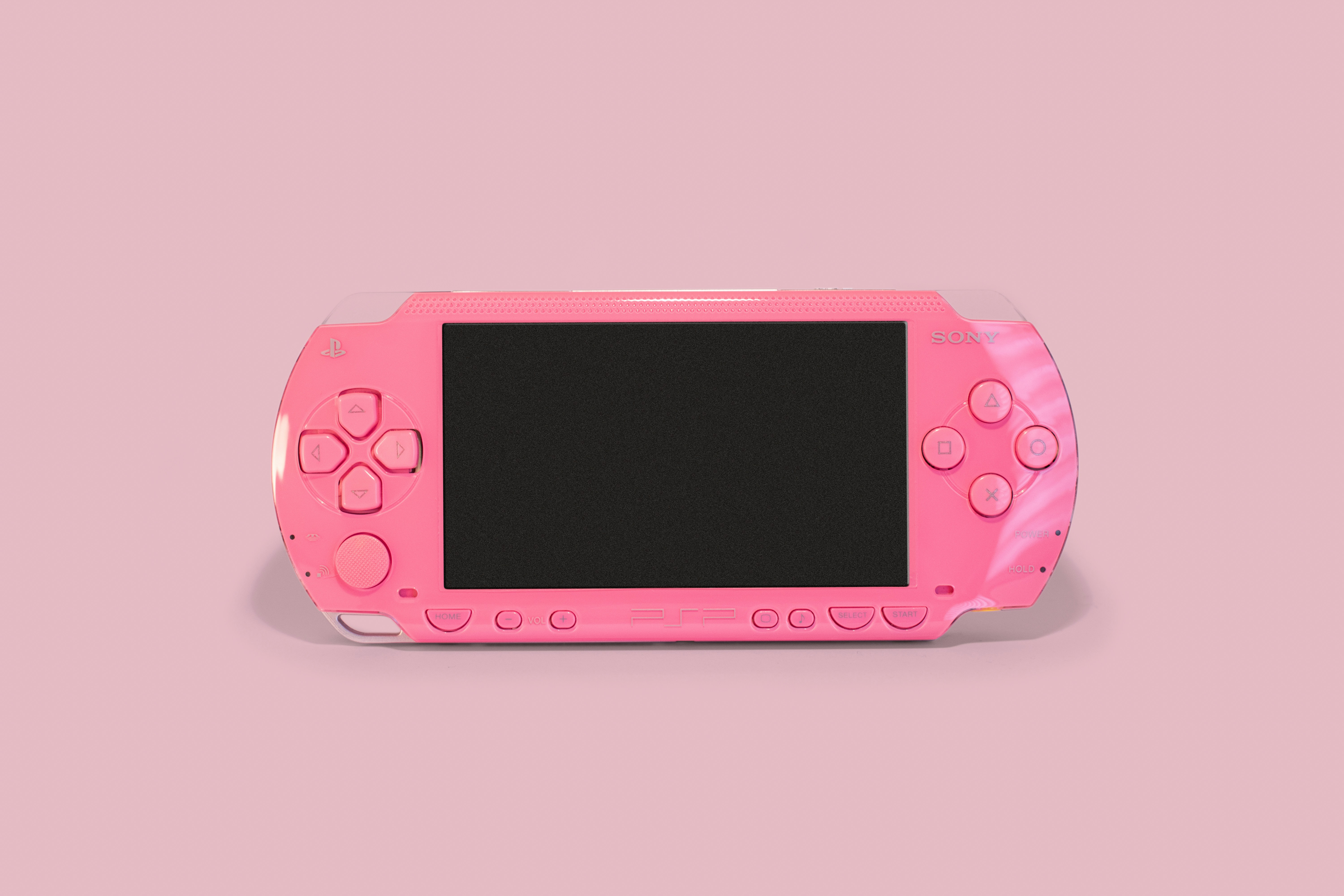
During summer vacation as a kid in the late 2000s, my brother and I would fight over who got to play on the Wii. When I won, I would play Animal Crossing for hours and hours until bedtime, every night. Weekends were the best because I would play from 1 p.m. to about 7—and yes, I would be playing only Animal Crossing that whole time. Occasionally I’d play other games too, like some fashion games, but Animal Crossing reigned supreme.
My brother, when he got the Wii, would play things like Sonic the Hedgehog and Spider-Man. I wasn’t always super interested in his choice of games. I liked to watch sometimes and make comments while he played, but some of them simply seemed too difficult for me. Action and fighting were a lot; I’d rather spend my time planting flowers and dressing up my character.
When a fight wouldn’t be resolved and we were forced to play together, we would take turns on our games. I’d play Marvel with him, and he would play my fashion games with me. We’d also play Mario Kart, Wii Sports, Wii Music, and Wii Play together—games that I considered both of us to like equally, as opposed to “my” games and “his” games.
One time, both my grandpa and my mother saw us playing a fashion game together (it was Imagine: Fashion Party… the girls who know, know), and sternly told us that I shouldn’t force him to play those types of games. I was confused and angry and kept asking why. We were taking turns playing games we liked; why wasn’t he allowed to play this dress-up game with me? I never got a clear reason, but that was that. We stopped playing the fashion game and played the Marvel one instead.
Video games weren’t always this gendered. In their birth, there was no gender. Pixels were pixels in the late 70s. Pong and Tapper were for everyone. By the 80s, however, the video game market was starting to saturate with boring, low-quality games. The video game crash of 1983 was a turning point for video games as companies were left with tens of millions in unsold inventory, reported The New York Times in October 1983. In other words, video games were over.
And yet! Nintendo single-handedly brought video games back in favor with the NES. Now retailers and companies knew they had to be more careful and strategic with marketing for video games. Market research showed that boys played video games more than girls, so marketers leaned into that heavily. Masculine ads during the 90s influenced the creation of more male-targeted games. And more masculine ads were created for them. It was an endless cycle.
In the mid-90s, however, there was the “girls’ games movement,” in which some companies and game developers thought to target girls. For older Gen Z and Millennial girlies, this movement resulted in games like Barbie Fashion Designer, Chop Suey, Rockett Movado, and the Nancy Drew series from HeR Interactive. While they’re not officially part of the movement, I consider the girlie games for the Wii and DS to be important parts of girlie game history. The fact that there had to be specific games made for girls said a lot about the state of the video game market.
Marketing played a huge role in why “video games are meant for boys.” It’s this marketing that created a need for girlie video games, since most of the already-existing ones are for boys. The entire history of video games and video game marketing led up to my Imagine: Fashion Party incident in 2009. My girl video game wasn’t meant for my brother, because the rest of the entire video game industry was already for boys anyway.
When my brother and I were allowed access to a computer, even our tastes in browser games were different. We would have games in common like Poptropica and Club Penguin, but he was playing things like Marvel Super Hero Squad Online and fighting games on Newgrounds, like ripoffs of Marvel vs. Capcom and King of Fighters. I was enjoying Pixie Hollow and Barbie dress-up games.
Becoming an awkward teen made things worse. After I graduated elementary school, my mom decided to send me to a private middle school in the hopes of giving me a better education. My classmates were stuffy, snobby, and rich. Really rich. Since I was one of the few middle class kids, they looked down upon my interests—including my video games. My male classmates, who rarely played games anyway, preferred sports games like FIFA or NBA. My female ones didn’t play games at all, and instead read books or just took more classes after school. I would get, “Huh? What is that?” in response to Animal Crossing.
Crushing. I was alone. This is what led me to be heavily involved in the video game community online. With a mix of genders and ages, I knew to keep my mouth shut to avoid predators and unnecessary attention toward myself. They weren’t talking about my games online. I had to especially seek out those communities. It’s because of these communities that I added some computer games to my repertoire, like Stardew Valley, visual novel dating sims, and, surprisingly, turn-based JRPGs (Japanese-style role-playing games).
My brother, who attended a normal, public middle school, found his tastes affected by his classmates there. His classmates introduced him to their computer games, which widened his tastes exponentially. He was playing first-person story-driven games, like Dying Light and Grand Theft Auto, or expanding to shooters like Counter-Strike.
Because of my involvement in the video game community online, and as a way to continue bonding with my brother despite our diverging taste in games, I liked to be on the pulse of gaming news. If there was a new Zelda, or Halo, or entirely new games like Fortnite, I was there and excited along with gamers online even if I knew damn well I wasn’t gonna play them.
Those games involve using a game controller or a keyboard like a Rubik’s cube, and having to memorize button combinations is stressful and time-consuming. My current favorite games are simple to learn yet provide me flexibility in how long I can play them. I can choose to play for hours like I did as a 10-year-old or a 15-year-old, or I can play in 15-minute spurts when I can squeeze them in during a busy day as a working 24-year-old.
Despite video games being one of my most consistent hobbies since childhood, video game marketing and my experiences online have shown me that my games weren’t my brother’s games, that my games were starkly different from what was popular, that my games were barely represented in mainstream video game news.
Nothing much has changed in the 14 years since I was an 8-year-old playing Imagine: Fashion Party. In 2023, the top genres by sales revenue were shooters, adventure games, and battle royales, according to Newzoo’s Global Games Market Report. Because of their popularity, only games that fall under these categories are considered “real” video games within the gaming community.
Outside the gaming community, these games are also considered “real” video games because of the moral panic over video games in the 2010s due to school shootings being linked to Call of Duty and other violent video games.
I remember hearing about this and rolling my eyes. They’re just video games. They wouldn’t be the sole cause of someone causing such violence. I was on the side of video games, and I debated with my privileged classmates in middle school about the issue.
I promptly shut up when someone said, “Why do you even care? You don’t even play those games anyway, right?”
Right. I was defending a community that didn’t claim me.
In the eyes of the media and the general public, only the violent ones are considered video games and the ones who play them, gamers. Both inside and outside video game culture, the non-violent games that women tended to play weren’t considered “real” video games. I guess it was a relief to not be connected to violent people, but what would I call myself?
Definitely not a gamer. The nail in the coffin that led me to never identify as one was my own brother. He was playing those top video game genres. I wasn’t.
“You wouldn’t like this cuz it’s a real video game.”
“Just go play Animal Crossing or some shit.”
“You’re not a gamer, though.”
Passing comments and moments blurred together to only add to the feeling that Animal Crossing, browser games, and dress-up games don’t count as “real games,” so therefore I’m not a “real gamer.”
Whenever I would ask him and friends online what exactly my favorite kinds of games were classified as, they could never give a straight answer.
So I buried my very real love for these types of games deep into me, something forbidden that I could never proclaim. I could never answer with “video games” when someone asks what my hobbies are, even though I spend hours on those games every night—just like my brother does on Overwatch and Marvel Rivals.
I never understood how my brother was impressed by my 1600 hours on Animal Crossing: New Horizons. He said himself that he’s never hit that hour count on any game he played in the same time period that ACNH has been out, regardless of the COVID-19 lockdown—yet he still made me feel that my video games were inferior to his.
To put the cherry on top of this gendered video game mess, women have been playing games just as long as men have. The Entertainment Software Association’s earliest report on the industry in 2001 stated that 57% of gamers were male, and 43% were female. In over 20 years, the population of women who play games has barely changed—it’s always been 50/50. Marketing has lied to us.
Despite this, women are much less likely to identify as gamers, with a 2015 Pew Research Center survey finding 48% of American women play video games, yet only 6% of them identify as gamers (whereas for American men, those stats were 50% and 15%).
I’m done with this. Women deserve respect as gamers, and stereotypically feminine games deserve their kudos.
Because of a more pronounced girlie culture that has emerged in the last few years—as shown by the popularity of Hello Kitty and blind box trinkets—I think my brother naturally eased up on his vicious video game discrimination. He stopped assigning the value of “real” or “not real” to any video game. And acknowledged that I was a gamer. Only recently did I ask him if he remembered anything he said to me about my video game habits, in order to inform him of his portrayal in this essay. He just nodded vaguely, and said, “Oh, I think I did say all that stuff…It’s whatever, though. You’re a gamer.”
I didn’t need my brother’s permission, but I’m adopting “gamer” for myself. I no longer shy away from stating what video games I adore. Even if people’s responses are a disappointed, “Oh, cool,” I don’t let it diminish my joy for my games.
My thousands of game hours are worthy of awe, even if it’s on cozy girlie games. The genre doesn’t diminish the value of the time I spent playing those games. I’m done pushing aside my own games because they’re called “shovelware,” pushed aside for being too pink, pushed aside for not having enough action. Our games are real games.
So yeah, girlie girl. You’re a gamer, too.
Shainna Alipon (she/they) is a freelance multimedia journalist from Las Vegas. They love writing about women’s culture, especially feminine people in nerd spaces. Their works are featured in indie publications like Devoid Magazine and Handbasket Zine. They’ve also started a YouTube channel to talk more about girly games. This disaster bisexual Filipino-American wants you to know that you are loved and their cats give you kisses!

I grew up with my sister with similiar circumstances. We both loved very different gaming genre so we agreed that we play all the games together. So I ended up playing dressing Barbie and planting crops and her racing cars and playing fifa against me. I admit that I really loved those "girlie" games. They are all games, can be enjoyed by all and they stimulate the brains one way or another.
I feel like if we stopped applying gender to the things that make us happy, we’d be much happier <3 be yourself my love