


I’ve had $17 on my EBT card for about a week now, but don’t want to spend it because then I’d have nothing. Panic might set in, making me more prone to reckless behavior like bingeing or buying drugs, neither of which I can afford.
I wait until the last possible minute before driving to Walmart for groceries, where I fill my cart with basics: bananas, almond milk, potatoes, frozen spinach, an economy-sized jar of peanut butter. I know the $17 on my EBT card will only cover a portion of this, but it’s okay because my part time per diem remote job is going to give me a new project any day now.
One crisis at a time, I think to myself wryly.
“Scarcity” is a word I’ve been using regularly for years to describe my mindset around food.
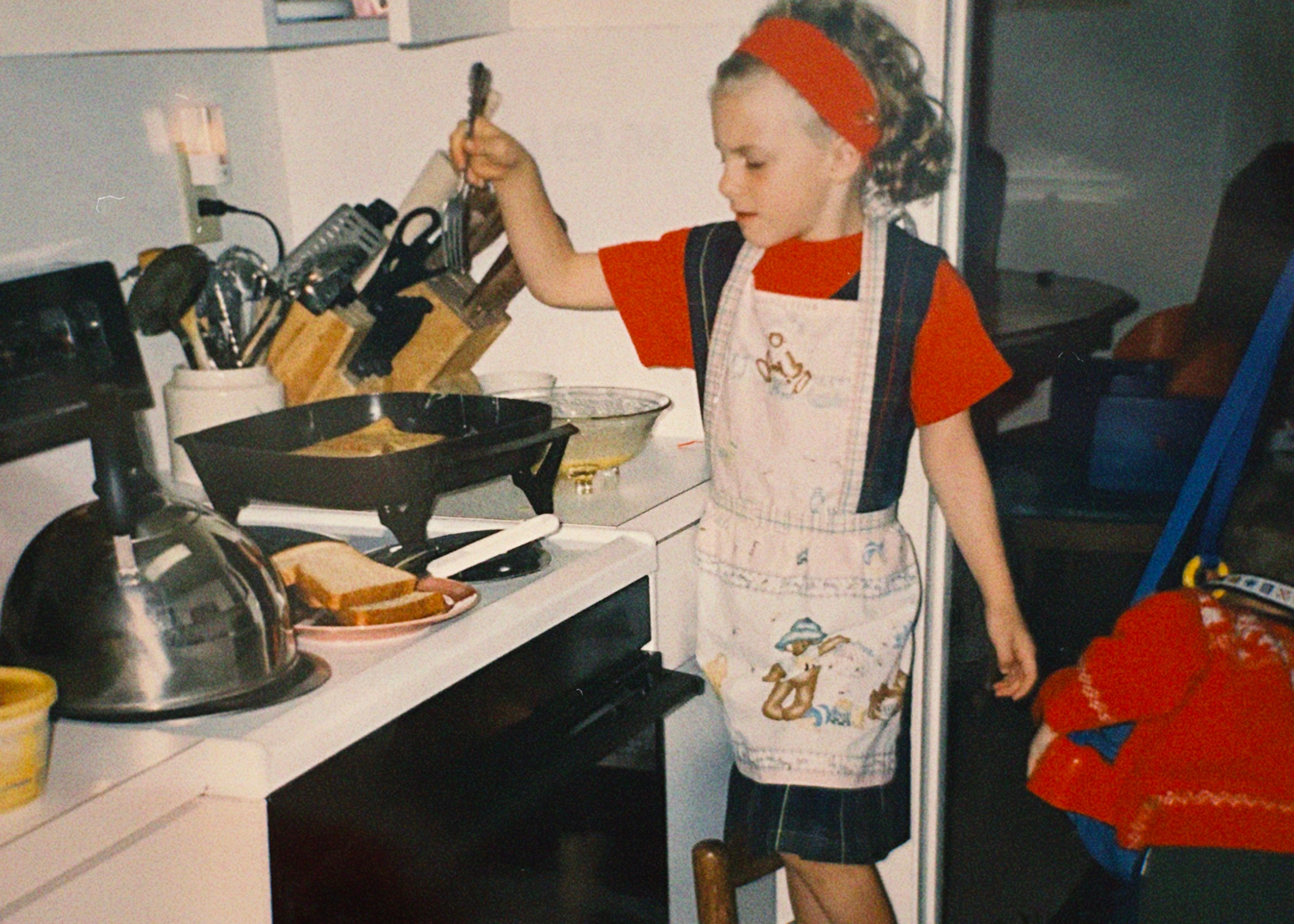
Growing up with six younger siblings on a pastor’s salary, meals usually consisted of things that were cheap to buy in bulk. My favorite lunch, which I’d prepare several times a week, involved boiling 12 cups of water in a large pot and then adding six packs of instant ramen noodles. To make it a real meal, I’d also add two or three cans of chicken. The best part was peeling open the lid and drinking the flavorful broth. There were certain privileges that came with cooking duty.
There was always food on the table, but not always enough for seconds. We siblings would race to get our favorite parts before they were gone—the biggest pieces of canned chicken, the most broth. (We’d save the leftover ramen for the next day, and it was always somehow dry and gelatinous at the same time, all the remaining liquid soaked up by the noodles. Rarely was there any leftover chicken.)
In our house, I learned to be a fast eater. I learned to save the best for last, pushing it to the side of my plate for safekeeping. We were never actually starving, but it always felt like the last to the table would get less than everyone else.
It wasn’t long before we started stealing food from the pantry outside of mealtimes. Mostly it was candy, which was limited to two pieces a day and policed by our mother. But she always took a nap from 1 to 3 in the afternoon, which was when we binged.
I never saw it as bingeing until years later, when bulimia ruled my life. But now I recognize the same desperate cravings, the same secrecy, the same relief when it’s just you and your spoils behind closed doors. This pattern would also repeat itself in my substance use.
Sometimes I wonder if food was my first addiction.
Occasionally, we’d get caught stealing from the pantry and punished with a spanking (if we were little) or no dessert (if we were not so little). More often than not, we turned each other in. Usually it was boys against girls, each faction trying to get the other in as much trouble as possible so no one would notice when we turned around and committed the same crime. This created a culture of suspicion, envy, and resentment. All over food.
Now that the seven of us are adults, we laugh about the “candy wars.” But for me, that was only the beginning of a life marked by food insecurity—if not actual, then imagined.
The day after my trip to Walmart, I check my EBT account and notice that my funds have finally appeared for the first time since the government shutdown. Go figure, I think. But I’m relieved. Already I’m thinking of all the things I want to buy.
Olive oil. Delicat a squash. Real greens, not frozen. Coffee creamer, a luxury. Veggie burgers. Avocados. Dark chocolate.
This quickly leads me down a mental path to indulgence, my head filling with forbidden foods—ice cream, cookies, bags of bulk sugary cereal, cases of instant ramen. Funny how my favorite poverty meal as a kid has become one of my go-to binge foods. The broth makes everything come up easier.
But no, I can’t entertain this thinking. I’m done with that sort of thing, aren’t I? Now that food is actually scarce, you’d think my brain would recognize the peril and turn off the part that wants to eat everything in sight, fuck the consequences. I’ve spent my EBT money on binge food in the past, and the shame was nearly unbearable.
Just not enough to keep me from doing it again. And again. And again.
I was diagnosed with bulimia at 17. After a stint in treatment that almost kept me from graduating high school, I got better enough to go to college 700 miles away. It wasn’t long before I relapsed.
Once again, sweets became the target for my lust. I’d walk into the cafeteria and come out with my pockets bulging with cookies. (My favorite kind was cranberry white chocolate chip.) Sometimes I wouldn’t even make it outside, waddling into the tiny cafeteria bathroom and vomiting cookies and hot chocolate into a toilet bowl already stained by others doing the same thing. It was gross, but better than the shared dorm bathrooms, where I’d have to stop if someone came in.
None of this was free, even though it certainly felt like it for me. I was blown away by the seemingly unending supply of binge foods available for the first time in my life. It wasn’t until I ran out of the allotted meals on my food plan that I knew I was in trouble. The semester hadn’t even run its course, and I found myself in a scarcity mindset once more.
Instead of learning my lesson and surviving on peanut butter sandwiches until my meals were replenished, I took the meager earnings from my student job in the marketing department and spent it on junk from the Walmart across the street—giant bags of animal crackers, tubs of Nutella, chocolate chips I’d eat by the handful. I’d stay up until 2 a.m., bingeing and throwing up until I started seeing streaks of blood in my vomit.
Still, I couldn’t stop.
My roommate eventually told the dean, who told my parents, who threatened to pull me out. I promised to start seeing a counselor. During our first session, she put up her feet and ate her lunch right in front of me, even letting out a belch at one point. Disgusted, I decided I was done with bingeing.
Instead, I would starve.
The summer before my sophomore year, my parents were on the verge of bankruptcy. I got two jobs, working at a lakeside hot dog stand and babysitting for the high school principal who lived across the street. It wasn’t long before the stress at home had me grasping for quick and easy sources of comfort.
I’d take my tips from the hot dog stand and spend it all on donuts at the Mexican bakery, which I’d eat while walking home, licking chocolate frosting off my fingers. Purging in the house had become impossible ever since I clogged the downstairs toilet and had to come clean to my mother, so I’d take a big black trash bag into the room above the garage and vomit into it. I’d also use my babysitting gig as an opportunity to binge and purge, waiting until my charges were watching Dora the Explorer before sneaking into the bathroom and kneeling on the tile.
I felt awful. I was losing money, weight, and hair. Yet I clung to bulimia more fiercely than ever. Something told me I was going to need coping methods if I was to survive in a world of uncertainty. Even if they weren’t that good for me, at least they’d keep me alive.
I worked my way through college, taking frequent breaks for financial reasons. By the time I graduated at 25, I was a shift supervisor at Starbucks making $14 an hour. What I lost in wages I gained in free food and drinks. This was the perfect excuse for bulimia to return—after all, bingeing and purging free food didn’t count.
Soon I added alcoholism to my list of coping methods. I maxed out credit cards on Uber Eats, all of which went down the toilet. When I couldn’t use my credit cards anymore, I began to steal food from Trader Joe’s and Whole Foods. My tactic was to bring in a shopping bag from another store and casually slip things inside, all the while acting like its contents had been purchased at my previous stop. The biggest thing I ever took was an entire gallon of ice cream. (Of course, I got caught. To this day, I’m technically banned from Whole Foods.)
Sometimes I was drunk for this, but more often than not I was sober.
COVID hit and I was furloughed from my administrative job at a catering company (more free food to binge and purge). I used my unemployment money to feed my bulimia until I finally broke down and entered residential treatment in 2021. It was there I finally learned that food could be dependable, neutral. Fuel for your body, not just your emotions.
I was becoming secure in my skin and my relationship to food. Slowly, it lost its power…at least, for a time.
Today, I’m on food stamps and Medicaid. After a lifetime of mental health struggles, I applied for disability in January 2024 but have yet to receive a verdict. I maintain a frugal existence.
Now, my food insecurity is based in reality. In any given month, I worry that my funds will run out early—and they usually do.
It would be one thing if it were just me running out of food, but I live with my sister. We both applied for SNAP when we moved in together—her for the first time, me for the third. We each listed the other as household members because we wanted to be honest and thought it would make sense that more money would be given for more people. Instead, my sister’s application was denied and my monthly amount was reduced. In their eyes, more people equals more income. Now not only are we still scrambling to pay rent each month, but we also have to start tightening our belts.
People tell us to “Just apply again!” It’s hard not to scoff in response. I suppose we should be grateful for whatever we get. After all, we aren’t guaranteed to get it tomorrow.
I still have bulimia, though it’s not as intense as it was in my twenties. I can go weeks without bingeing and purging, and do my best to ensure that what I do eat contains protein and healthy fats. Still, there are moments of weakness. I can’t turn off the part of my brain that beholds my newly-loaded EBT card and sees free binge money. It’s difficult to trust myself sometimes. I tell myself there are others more deserving of aid, who wouldn’t abuse this privilege as I do.
Yet being on SNAP has been a lifesaver. It’s made me more careful about how I spend on food, encouraged me to finally listen to the advice of dietitians and plan my meals. It calms the part of me that wants to eat everything in the pantry before it’s gone. It soothes the voice that tells me I will never have access to *insert forbidden food* again. It allows me to focus on neglected areas of my life that have been swallowed by my preoccupation with food.
Nothing in this life is certain, least of all government benefits. This is another lesson I’ve been forced to learn. So I budget my grocery trips and ration my goods until the next payment hits, all the while keeping my head just above the waters of panic.
There’s always time for that tomorrow.
Christina Jumper (known to friends as Chris) is a queer harm reductionist who writes about addiction, eating disorders, religious trauma, and other fun stuff. You may know them from Pickles and Vodka: a Mental Health Podcast, where they tell the unspoken stories of their community while shining a light on their own everyday struggles. One of these days they’ll finish their memoir.

Thank you for writing with such honesty and vulnerability. It’s so important that we don’t hide in shame. In my late teens and twenties I struggled with bulimia as well. Later, one of my four children struggled with anorexia, including a 4 month in-patient stay. Alcohol also plagued me, but later in life after divorce (quit and now help others break free from booze). I’m glad you have your sister and I hope you keep plugging away at your memoir. You’re a fantastic writer and clearly have an important story to tell.
So much of this is so very very familiar, right down to the animal cracker tubs and the sugary cereals that were the meals I (over) fed myself as a kid at home, alone.