


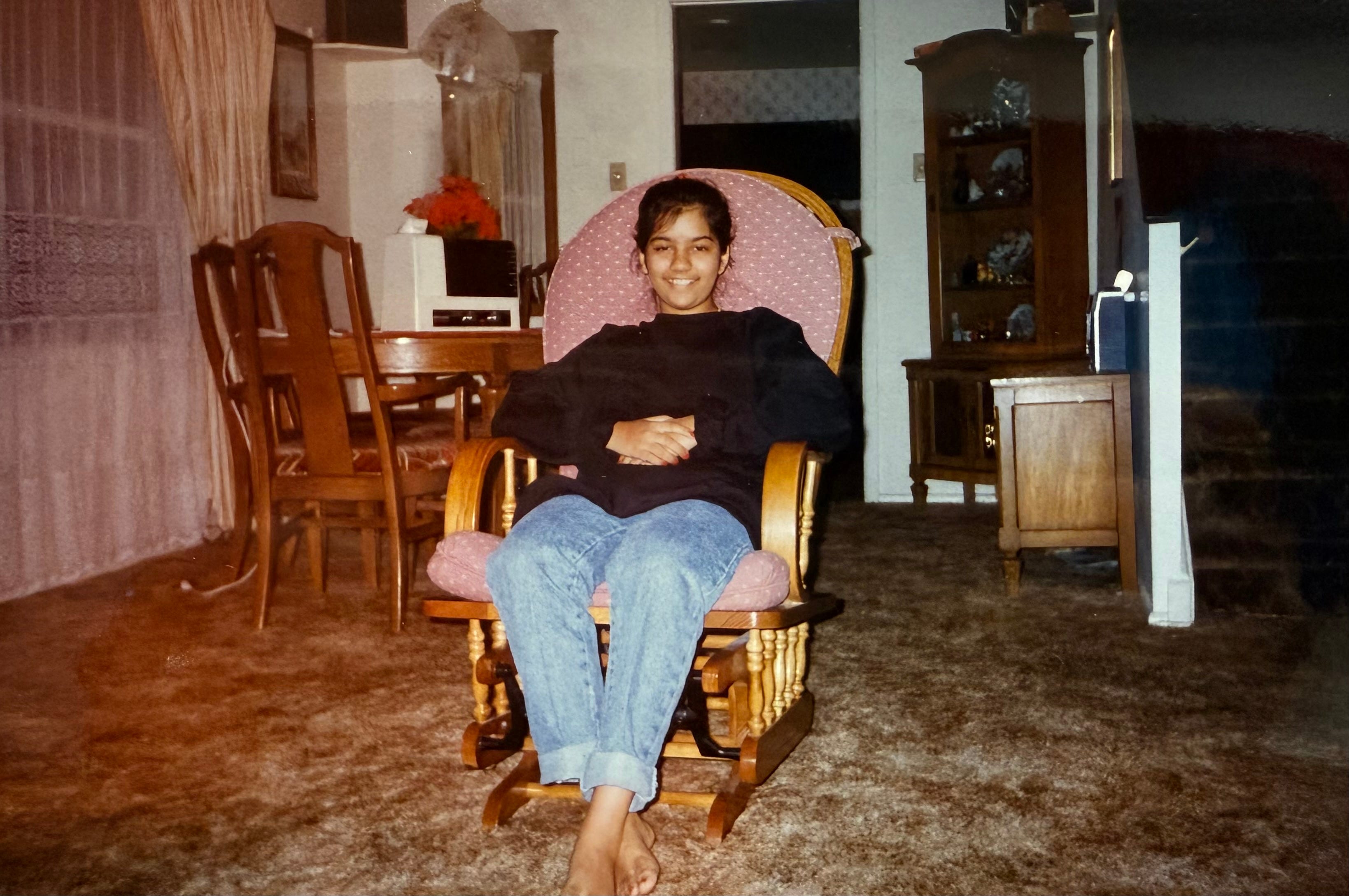
The house I grew up in had brown wall-to-wall carpet in every room, like a layer of dark soil beneath us. As a kid, I traced my fingers through its meandering lines while I read Little Women on my bedroom floor. When my younger sister was a baby, she delighted in grabbing the shaggy fibers in her chubby fists, trying to pull them up like grass. My older sister, who was troubled in ways I would never understand, vacuumed the carpet in patterns that soothed her.
Too frugal to replace the carpet just because it was ugly, my immigrant parents simply accepted it as another unfortunate part of the American dream, along with winter and bosses who couldn’t pronounce their names. Raising three daughters, forging careers in a foreign land, and their struggling marriage took precedence over correcting this petty crime of interior design.
In the kitchen, the dusky strands absorbed the scent of my mother’s cooking, our weekly West Indian menu of potato curry, dal, and roti. In the living room, the carpet buffered the soundtrack of the Bollywood films we watched on weekends. When I became a student of Bharatanatyam dance in third grade, the pile in the den matted under my bare feet as I practiced.
For six years, the brown carpet hid my family’s stains and shrouded our secrets. Buried in its swirling crevices was the bitter dust of every argument and silence. The coarse covering muffled the echoes of feet stomping up the stairs, doors slamming, and voices raised in anger and protest. In moments of chaos I still struggle to understand, it stifled slaps, shoves, and sobs. The brown carpet became the mottled earth from which we grew, unsteady but always reaching for the light.
After my parents divorced and my father moved out, my older sister discovered hardwood flooring beneath the brown carpet. We were stunned to realize it had been there all along. That summer, my mother, my sisters, and I rid the house of its mangy padding. We pulled and hacked at the carpet, sneezing and coughing from the grime, gouging our fingers on the staples. We stuffed the torn shards into trash bags and dragged them to the end of the driveway.
When we were finished, the house was transformed, lightened physically and emotionally. Taking off the carpet was like removing heavy makeup from a performer to reveal the unadorned face beneath, beautiful in its raw vulnerability. Our words echoed from room to room; there was nothing to smother our voices. At 12, I knew that a house could be a battleground. In the years to come, my mother taught me how the same space could become a refuge.
By the time I was in high school, my mother had left the corporate world, completed her yoga teacher training, and repurposed the den as her yoga studio. On Sunday mornings, her students criss-crossed the floor with colorful mats, the room echoing with the sound of “Om.” Everyone who visited commented on how calm and welcoming the space was. They would never know about the years of the brown carpet, and how my mother had to fight for our peace. Eventually, my own two children crawled across the bare wooden planks, unaware of their hard-won story.
In 2020, the house was sold after 34 years. The brown carpet exists only in old photos, a reminder of my family’s past and all that we have overcome.
Sumitra Mattai is a writer, storyteller and textile designer based in New York City. She holds a BFA in Textile Design from the Rhode Island School of Design and an MFA in Creative Writing from The New School. Her essays have been shared in Huffington Post, Scary Mommy and Open Secrets Magazine, among others. For more information, visit her website, www.sumitramattai.com, find her on Instagram @sumitramattai, or check out her newsletter, Clothbound, about textiles in art, design and everyday life.
Object-ives features flash nonfiction essays of 500-999 words on the possessions we can’t stop thinking about.
Recommended reading on possessions:
“How to Spend $2,000 Recreating Your 1983 Basement” by Eric Spitznagel, Spitz Mix
“My Date with the Glade Plug-In Killer” by Edgar Gomez
“Estate Sale” by Elyssa Maxx Goodman, Miss Manhattan
“How to Make Room for the Work You Actually Want to Do” by Kayti Doolittle - Paper Ghosts
“Why You Can’t Throw Stuff Away (The Neuroscience of Clutter)” by Dr. Dominic Ng, Brain Health, Decoded
“How Letting Go of My Mother’s Things Helped Me Hold On to What Matters” by Dina Aronson, Newsweek
“DVDs are the new vinyl records: Why Gen Z is embracing physical media” by Cerys Davies, The Los Angeles Times
New York Found But Not Lost scarf giveaway, bryantparknyc on Instagram

Thank you for including me and what beautiful writing. ❤️
I can see why you earned an MFA in Creative Writing from The New School. So well written. Glad your family regained its footing, carpetless.