


A few hours into dress rehearsal, water begins to pour from the ceiling of the auditorium. It streams loudly from around the edges of an air vent onto the carpet of the aisle below. Parents move out of the way, and dance school staff find trash cans to catch the deluge and tape up the aisle to prevent passage. Up on stage, made-up girls in glittery costumes, bunned or ponytailed hair lacquered to their heads, carry on practicing their choreography. We point our phones at them. So cute.
My 9-year-old’s group is escorted off the stage, and we prepare to go, pausing at the high school’s glass front doors. Beyond, the rain still falls and the street is partially flooded. Our umbrellas are in the back of the SUV; yes, this storm was forecast, but when we came in, the temperature was still in the 90s and the sun beat down pitilessly. I didn’t think to bring them in.
So I festoon my daughter like a coat tree with her costumes and dance bag and my leather purse and leave her just inside the doors, alongside a dance classmate who’s also waiting on her mom. I jog down the sidewalk to our car, make two U-turns, and pull up as close to the door as I can, one back tire against the curb, to minimize her contact with the brown ankle-deep water that reaches well into the street. We load up and head for home.
Before we moved to New York, it wasn’t a place I associated with extreme weather. I’d heard about Hurricane Sandy, of course. Then, a few months after we moved to Queens in 2021, there was Ida. Our garage flooded, but we didn’t notice it right away, and a few months later I had to throw out the contents of moldy boxes, an outgrown booster seat with greened straps. That was nothing. A few miles away from us, a whole family, including a 2-year-old, drowned in their basement apartment. In all, dozens of people perished in the storm.
Most of the storms are not hurricanes, don’t have names. Weeks after we’d moved to a different part of Queens, in 2023, I drove my husband to work and ended up (probably unwisely) fording an inundated stretch of road under a highway overpass. I remember commenting that in New York City, of all places, I hadn’t expected to need our SUV’s higher clearance for this kind of rugged driving. Later storms came with their own flooding patterns. The intersection in front of our kids’ school became a lake; the boulevard we live on, a river, the asphalt buckling into jagged ridges. A section of six-lane highway near the bay was closed off by police when it temporarily returned to marshland. A different highway, I-295 where it dips to pass under the Northern Boulevard bridge, wasn’t closed off in time, and cars that went into the water were stranded. I saw the photos later.
Basements flood, cars flood, subway tunnels flood. Sometimes people die. After record rainfalls hit late last October, rescue workers were able to save people from inundated cars in Queens. But a man pulled from a flooded basement in Crown Heights by a scuba team did not survive. Neither did another man in another basement in Washington Heights.
But those of us who didn’t lose our cars or carpets or lives keep on showing up to work, cooking dinner, delivering our kids to school, dance, taekwondo, all of which remain open. Can you call something a disaster when it happens this often? It’s becoming just another day.
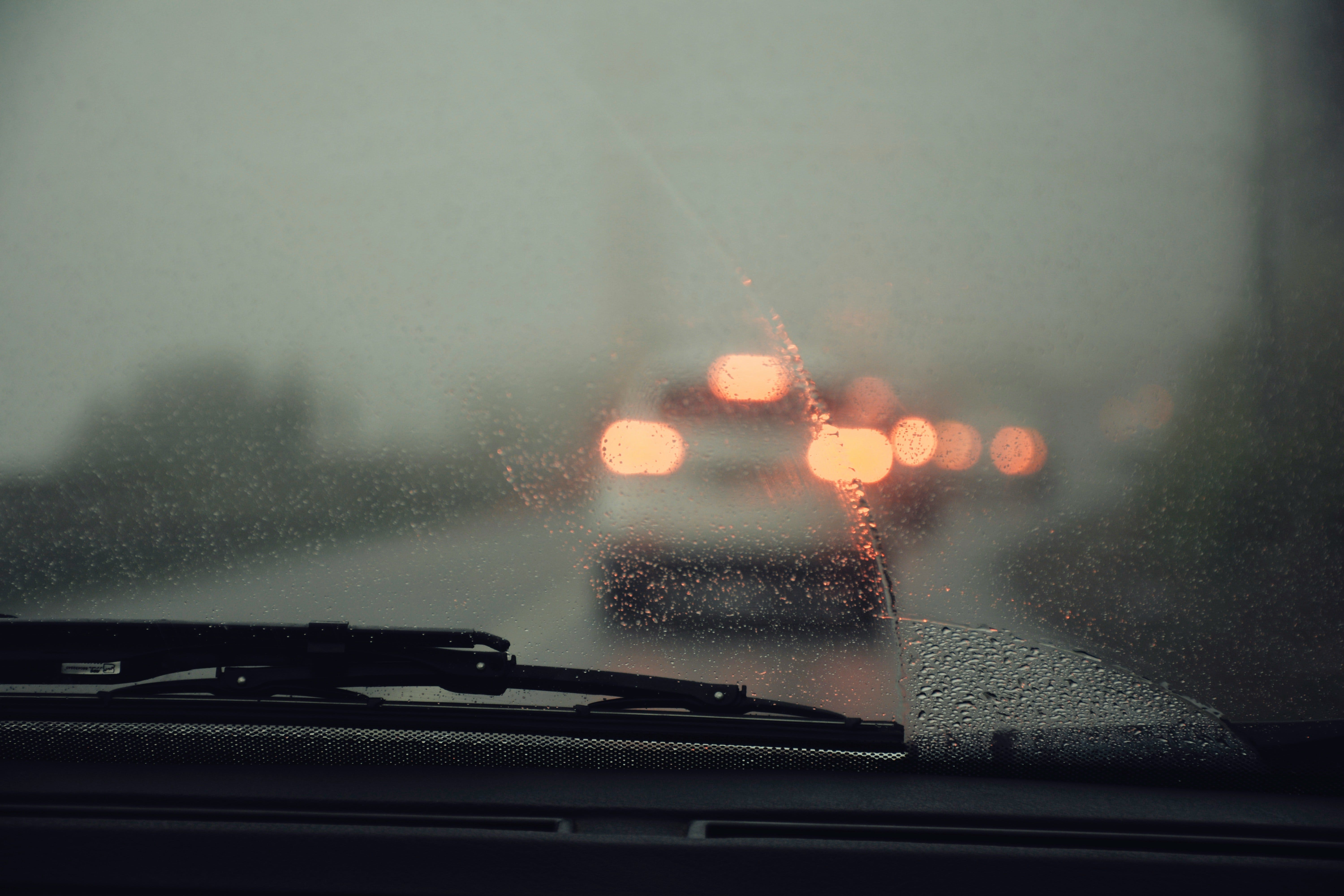
On the Wednesday of the dress rehearsal, I queue up Google Maps to guide us home. The high school is only a few miles from our house, but I don’t know the area. It’s only when we’re already on I-295 that I realize Google Maps’ mistake, and my own. Far from the nearest exit, we come to a stop, snarled at the start of a dark-red section leading up to Northern Boulevard—the same dip whose inundated cars made the news last year. The minutes tick by as we inch forward in a pack of trucks, cars, minivans, SUVs. The estimated miles left in the tank tick down from 335 to 330. The windshield wipers swipe back and forth without urgency; it’s still raining, but not hard.
New York City has 7,000 miles of sewers. Most of those in Queens were built to handle up to one and a half inches of rainfall per hour. But as rainstorms and hurricanes grow more intense, and the sea slowly rises around us, the sewers don’t cut it anymore. The city says it’s working on upgrades. Maybe we will manage to leave a livable city to the next generation. Maybe we won’t.
My 9-year-old asks if she can have popcorn when we get home. It’s after eight o’clock now, and she hasn’t eaten a thing in four hours. Food was strictly prohibited in the newly renovated auditorium. The only snacks in my bag are a kind she doesn’t like, so I pass her a mint instead. Then I give her another one.
Just ahead of the Northern Boulevard bridge, there’s a line of passenger vehicles stopped on the raised shoulder. Is there deep water on the road ahead that the drivers decided not to chance? Should I pull over too?
I don’t. We’re moving a little faster now, near the end of the red stretch of route. The asphalt under the bridge is strewn with debris I can’t see clearly in the dark, perhaps clumps of dirt and bits of tree, but the water seems to have come and gone. Just after the bridge, three cars stand stalled, lights flashing. I weave around them, and we are free, less than 10 minutes from home.
It’s late when we arrive, past teeth-brushing time, and it’s a school night. We eat, and my daughter showers off the makeup and hairspray. I sit with her as she falls asleep. We will get up tomorrow, remember our umbrellas this time and keep going, one day after another, until we can’t anymore.

Shawna Williams is a Queens-based journalist and editor with a focus on science and medicine. She is currently at work on her first novel.

And we all just keep hoping for normal, when what we knew as normal doesn’t exist anymore.
The details here make this all the more terrifying. "Past teeth brushing time." "Snacks she doesn't like" these put us in the car with you. In the rain. The fear. This is happening. And we can't really do anything about it. We fear for ourselves and our children and our children's children. Great piece.