


When your face appeared on my laptop screen, I blinked. My mouth went dry. A LinkedIn notification showed that you visited my profile, even though we hadn’t spoken in more than twenty years.
Your last name had changed, but you didn’t look much different from how I remembered you in the photograph that hung on our refrigerator all those years ago. In the picture taken on my twenty-first birthday, you grinned as you fed me cake, a row of piercings lining your ear.
The shutter caught me faux-protesting, gently pushing against your arm, draped with a bracelet of wooden Buddhist beads. A child’s plastic barrette held wisps of newly cropped and dyed blond hair out of my eyes, which were framed by wild smudges of black eyeliner.
I wouldn’t have become the woman in the snapshot if we hadn’t been accidental roommates in college. You introduced me to punk shows, vegan restaurants, and Riot Grrrl zines. The only thing I remember offering you that semester was flashcards for our Brit Lit final.
More than two decades later, between back-to-back meetings at the PR firm where I spent nine-hour days talking clients down from unrealistic demands, I stared at the screen. Did you mean to click my name, or did your finger slip, forgetting that LinkedIn lists every profile viewer?
I typed your name into Google and learned you were married with two children, living a few towns away from the apartment we shared in our early twenties.
***
You had convinced me to move to New Jersey shortly after I graduated. “Come live with me. We’ll find an apartment near the train to New York,” you said when I bemoaned my life as a clothing store employee. I packed my things within weeks.
I needed to be close to you, believing proximity could make me more like you. Do you remember how, during Finals Week, when I was sad over some guy, you ran into the Boston Public Garden, ignored the “No Trespassing” signs, and plucked a yellow tulip, saying I deserved something pretty? I wished I could simply take action like that without always overthinking.
I had also hoped proximity to the city would bring big things: an editorial assistant job at a glossy magazine, enough money for rent and Chanel Vamp nail polish. Maybe I’d even date a hot guy in a band.
That summer, the air in the apartment swelled from blistering heat. We sought refuge in the living room under the window AC, napping together on the futon, limbs intertwined like kittens, or reading Anaïs Nin aloud, searching for clues on how to become women.
Other nights, we layered our lips with crimson and descended into darkened clubs. A circle of guys, acquaintances, gathered close. I watched them watching you as you tucked a tendril of your pixie-cut brown hair behind one ear, then smoothed the front of your plaid skirt. Their bodies shifted from stiff stances to softened figures, arching like willows down to your ear to say hello.
I wanted them to look at me that way. No matter how much weight I lost after college or how I tried to replicate your style, I couldn’t conjure your confidence, like how you winked at onlookers that night as if casting a spell.
You hated the attention; at least, that’s what you said. Maybe that’s why you reached for my waist, finding the space between my babydoll T-shirt and worn jeans, your fingers echoing the beat of the bass on my overheated skin. I wrapped my arms around you and melted into the reassuring warmth of your touch, which gave me a shot of courage. Knowing you were an arm’s length away, I could run off in dark corners and kiss guys whose names I’d never know.
For Christmas, you made me a journal with hand-painted pages and Nin quotes, telling me every writer needed one. I wasn’t a writer, but a waitress. The glossy magazine job never materialized, and the mailbox bulged with rejection letters. My mother suggested I take an admin job; you circled writing jobs in The Village Voice classifieds and left notes of assurance around the apartment.
Do you remember how we draped fairy lights on the porch, sharing clove cigarettes under the canopy of a giant maple? Between crackling drags, we mused about the future where we’d be middle-aged neighbors, babysitting each other’s children, and bringing the other leftovers for lunch.
No one had ever been that present in my life. On Saturday nights, you’d be waiting for me, curled up on the futon under dimmed lights, when I got home from work. “I can’t sleep when you’re not here,” you’d whisper.
My attraction to you terrified me. So did my fear of destroying the most important friendship I’d ever had. I took double shifts, hoping that avoidance would solve the problem.
You noticed, and asked me to spend time with you and your new boyfriend — a guy in a band.
“Come out with us. I miss you.”
“I can’t go on dates with you.”
“It’s not a date. We’re just hanging out with his friends. I feel more comfortable when you’re there. Pleeeeeease.”
Later that night, I sat on the edge of your bed. My heart raced as I looked past you.
“I’m in love with you. I’m sorry. I feel like I’ve been lying to you.”
Had you asked why I chose that night, I couldn’t have given you an answer. Today, I understand. I feared that you were becoming his, not mine.
“You’re terrible at hiding your feelings. I’ve known for a while,” you said, holding my gaze until I looked away first.
I exhaled with relief that you didn’t make it weird, and I could go on living without being crushed by embarrassment.
Then you kissed me. Just as quickly as your lips met mine, you pulled away. I don’t know what I expected. I assumed we’d talk it out like we did everything else and laugh about it years later. You weren’t supposed to kiss me.
“I love you. I need you in my life, but we don’t love each other the way you think we do,” you said with a steady voice while my hands shook.
The person I am today would have asked you why you kissed me. That night, I had run out of words. I stared at the pile of CDs on the floor, Tori Amos floating in a cloud of shards. How many times had we left the album on repeat for hours?
Maybe you said something important. All I could hear was music that wasn’t playing.
I ran up the narrow stairs to my attic bedroom and scribbled ramblings in the pages of the handmade journal until dawn.
We never talked about it again. Did it keep you up at night weeks later, as it did me?
A few months passed, and I found a job in New York City editing corporate press releases. It wasn’t the job I wanted, but I hoped it would lead to something better.
Work and commuting took up most of the day. With more space between us, we returned to a familiar rhythm: movies on the futon, basement shows, and occasionally you met me after work for veggie burgers on St. Mark’s Place. While people-watching punks with Manic Panic purple hair, you cackled about your weird coffee shop customers, and I dished about my office crush.
Except it hadn’t returned to the way it was before, had it?
Does the night I stood at the counter, chopping tomatoes for veggie chili, haunt you the same way it haunts me? You tucked your arms beneath my baggy overalls and hugged my waist. The intensity of your squeeze was as tender as it was cruel. Do you know your fingertips left invisible imprints on my skin, even years later?
“If you lose any more weight, I won’t have anything to hold onto,” you said as you raised your voice an octave, the way you did when you attempted to cloak any seriousness. You started to say something more. Stopped.
I wanted to ask what was on your mind. Instead, suffocating from the cloying smell of vanilla and hazelnut coffee syrup on your work shirt, I stared at the porch door, willing it to open and release a rush of air.
If you knew how much I needed your friendship and approval, would you have done anything differently?
A few years later, I shared this with a guy I was dating.
“Don’t you think your approval was as important to her?” he asked.
Back then, I never considered that you needed anything from me.
Maybe that’s why I left, transferring to the Boston office as soon as a position opened.
I wasn’t sure how to break the news. Instead of taking my place on the futon next to you, I retreated to the wicker chair, unable to make eye contact, and clutched a pillow to my waist.
Your face drained of color when I told you.
“How can you do this to me?” you asked, tugging at the beads around your wrist.
“I’ll visit. Help you find a new roommate. We’ll still go to shows together. I’m not leaving you, just moving.”
“I don’t want a new roommate. If you leave, we aren’t friends anymore.” Your voice cracked, then lowered into a sharp, accusing staccato.
Blood beat at my temples, drowning out whatever you said next.
“You’re selfish and deserve to be alone,” I said. I wasn’t sure where the words had come from, but in that moment, hurting you was my intention.
Neither of us spoke another word that night; instead, we withdrew to our rooms.
In those final weeks, doors creaked, shower knobs turned, and the refrigerator with our picture opened and closed. We remained silent.
***
After I left New Jersey, you disappeared from my life for two decades, until LinkedIn showed me you had found my profile. I wondered if I’d see a message pop up in the sidebar asking, “How are you?” Or if you would confess that over the years, you had thought of reaching out, but it never seemed like the right time.
That’s the answer I would have given had you asked. But neither of us ever messaged the other.
A few months later, after a breakup, increasing work demands, and too many afternoons crying in the office bathroom because I felt trapped in a career I never wanted, I quit my job to pursue freelance travel writing. My savings bought me a one-way ticket to Europe and a new journal. In a fit of anger years ago, I burned yours, but I never stopped writing or carrying a notebook with me everywhere I went. You taught me that.
Seeing your face on the screen didn’t cause me to quit. It reminded me how, during a summer so hot our dresses clung to our curves, I believed you could do anything, and you believed that about me.

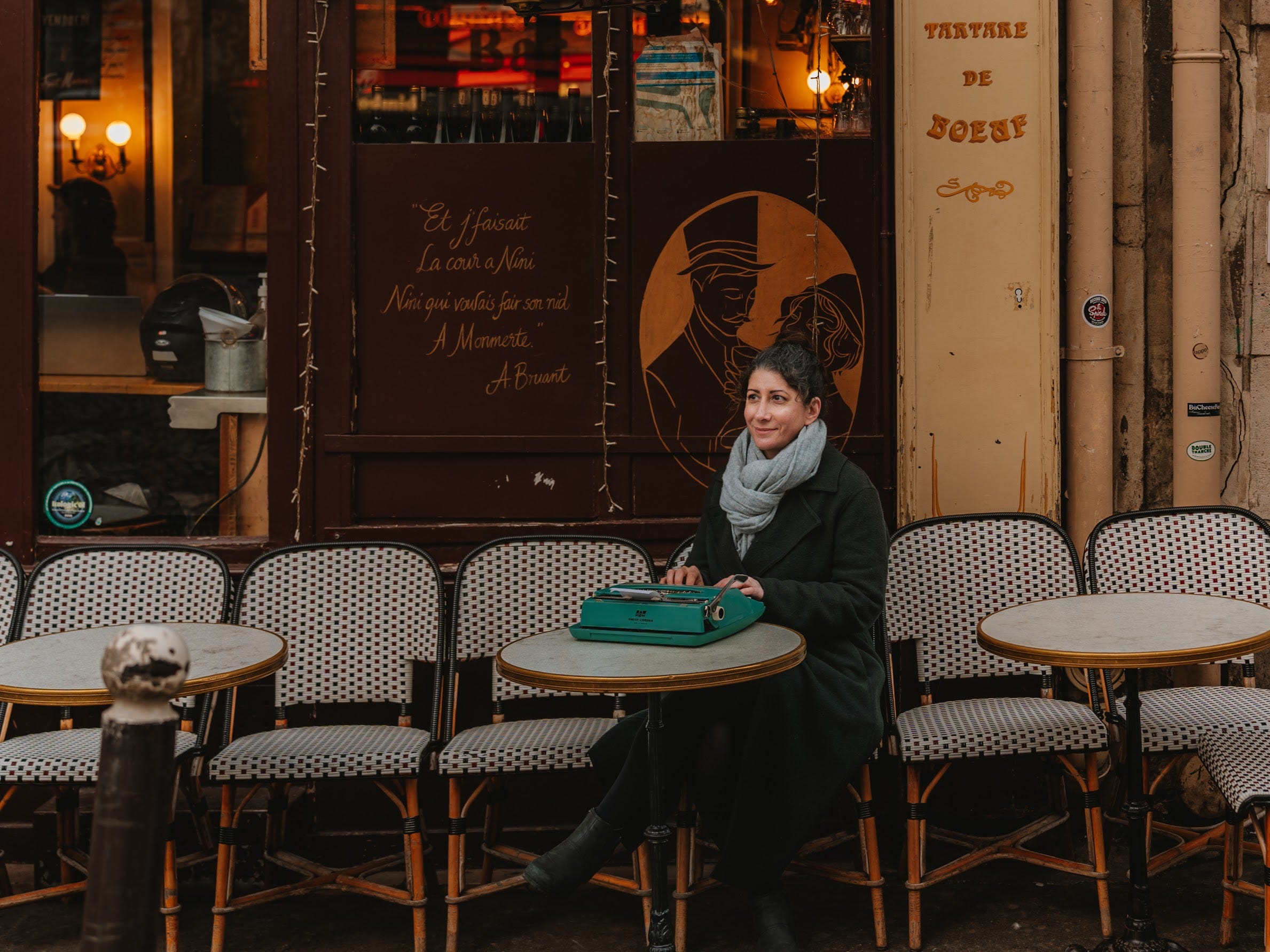
Kristin Amico is writing a memoir about finding the courage to quit a career she never wanted and backpack solo around the globe in her forties. Her work has appeared in Off Assignment, Sundog Lit, HuffPost, and The Toronto Star, among others. She spends her weekends offering typewriter poetry on the streets of New York and other cities. Find her at www.travelingtypewriterpoet.com.

"Maybe you said something important. All I could hear was music that wasn’t playing." There's so much in here I'd like to underline and bold. This pain of female friendships. So hard to talk about. So hard to forget about. Thank you for bringing this into the world.
Exquisite, Kristin! I loved this piece from the first read, and I’m so happy it found the perfect home. Can’t wait to read your next one!