


It was a sunny Saturday morning when I called my husband on FaceTime from Mexico, where I was studying Spanish for two months. I’d just looked at our credit card bill online. What I’d seen had made my heart freeze up.
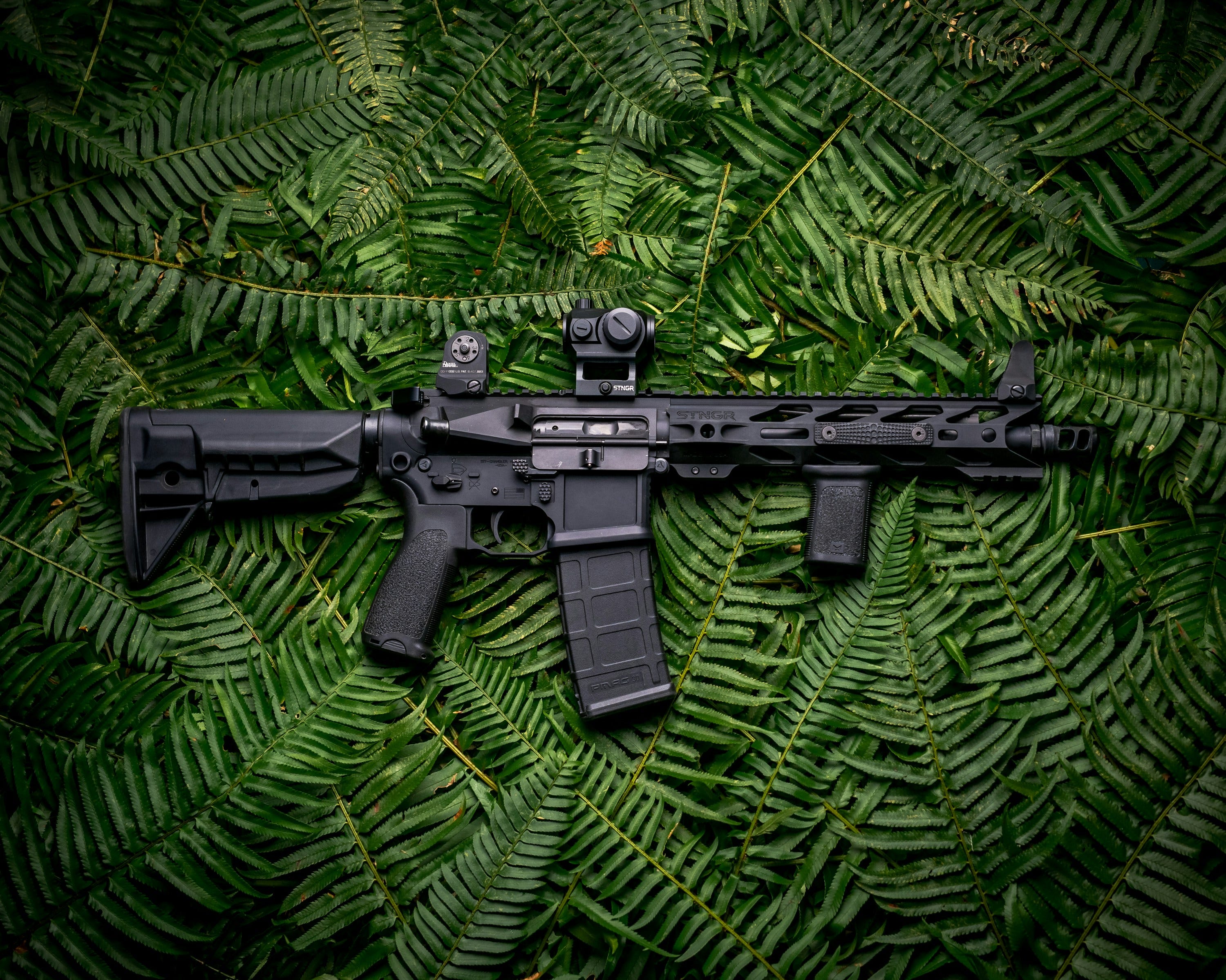
“Did you buy another gun?” I asked, as soon as he appeared on the screen. When I first dialed, I had a faint hope that the $1,500 charge from Wade’s Gun Shop was a mistake. Despite our marital problems, I thought we were still a team. My husband would never buy a gun without my agreeing to it.
“Yeah! A Glock pistol!” he exclaimed.
The world warped. My heart sped up. “I can’t believe you did that without asking me.” Before I left for Mexico, I’d reluctantly agreed to his purchase of an AR-15 rifle for target shooting—a negotiation that had taken months.
“I knew you would say no.”
“So, the answer is just to do it behind my back?”
“It’ll always be in the safe when you’re at home. You won’t have to see it.”
Safe or not, he knew I’d say no to a handgun because we’d already discussed it. Mere seconds after I’d agreed to the rifle purchase, he’d dismayed me by telling me he wanted a pistol too. I’d put my foot down. No way I would allow two guns in the house.
Some marriages, no doubt, happily support a full armory. But I didn’t think mine could. I just hated guns too much.
For one thing, I grew up in a liberal city where no one I knew had them but that didn’t make my hatred of them any less potent. For another, I took after my pacifist mom, who’d been a draft counselor during Vietnam, and who’d had, among her old treasures, a pendant with the 70s slogan “War is not healthy for children and other living things.”
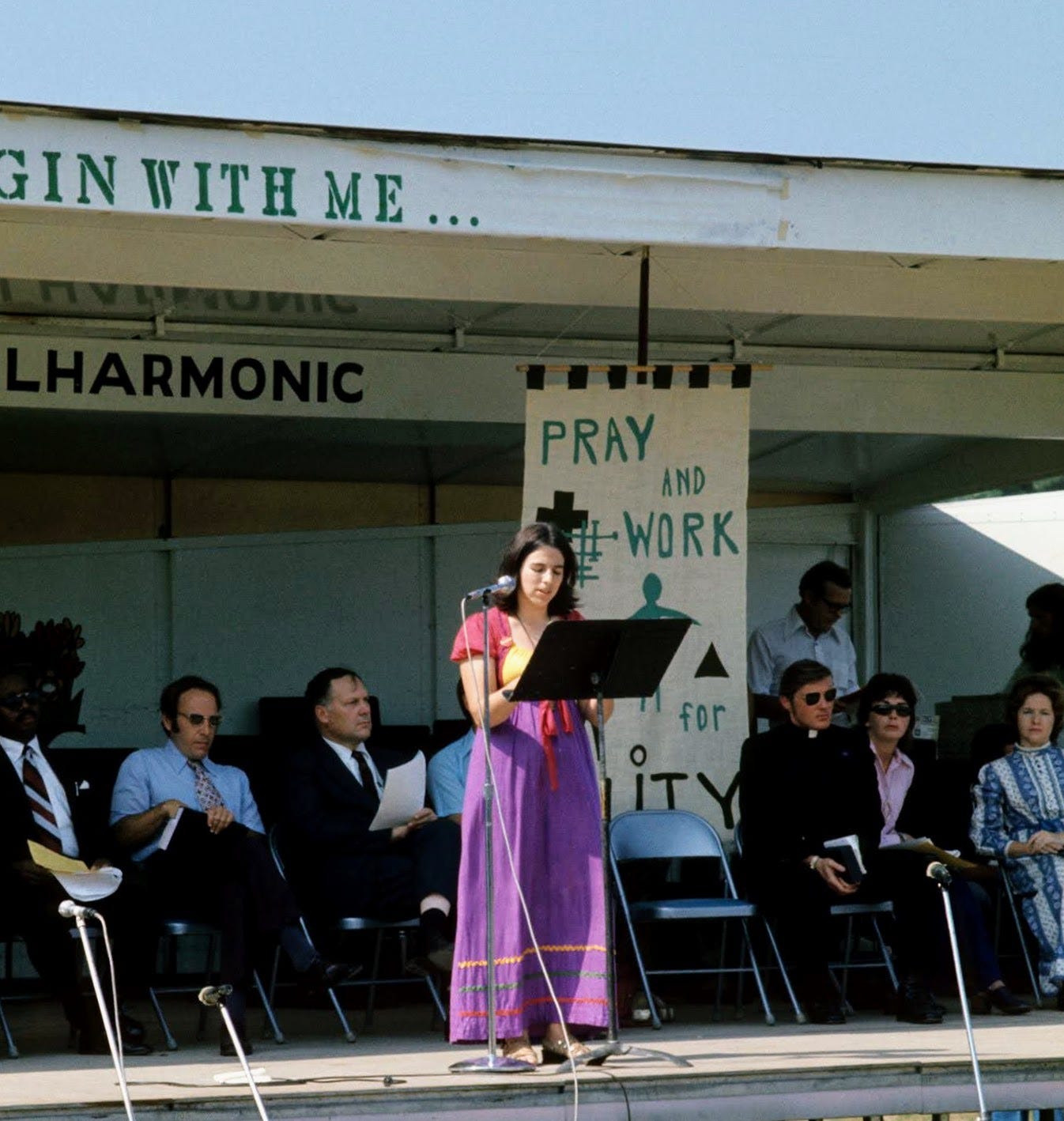
I loved that pendant as a kid, probably more for its groovy flower than the slogan. Still, I absorbed my mom’s longing for a non-violent world (she always put a dove on top of our Christmas tree instead of a star) and along with that, a deep revulsion towards guns. It was based largely on unfamiliarity with them, but that didn’t make it any less potent.
My husband, on the other hand, had gone target shooting and hunting with his dad as a kid. But it wasn’t until 2016, when we’d been together for nearly 10 years, that he announced he wanted the AR-15. By then my childhood hatred of firearms had crystallized into a white-hot loathing thanks to school massacres like Columbine and Sandy Hook.
My husband kept insisting, though. Eventually I caved, hoping that a big compromise on my part might help our ailing marriage.
It didn’t. The moment the rifle arrived, it felt to me like an unpredictable live creature had come into our house. Even when it was in its safe in the garage, I could sense it there lurking. When he took the AR-15 out for target shooting and I actually had to see it, my skin crawled and my adrenaline spiked. We fought more than ever before.
And now, thanks to the arrival of this pistol while I was in Mexico, we were fighting again.
“I can’t believe you would disrespect me that way!” I shouted at him over FaceTime. My voice was high-pitched. Quivering.
“Like you show me so much respect,” he threw back. The argument went downhill from there. It became not just about the pistol but about everything that was wrong with our marriage. His pot smoking, which I perceived as excessive. My two-month trip to Mexico, which he perceived as abandonment. Our lack of financial partnership, which we mostly ignored. And so on.
Up until this fight, I’d told myself that this Mexico sojourn had been good for our marriage. The month before I’d left had been tense. We were both reeling from being rejected as foster-to-adopt parents by social workers who could see our fault lines more clearly than we could.
As devastating as this rejection was, I knew the adoption agency had made the right decision—the one I hadn’t been brave enough to make. Soon after, I left for Puebla, Mexico, to study Spanish. I’d had this trip planned for a while. Originally, it was going to be my last fling with freedom before we became foster parents. Now I wasn’t sure what it was, exactly.
At first, the distance seemed to lead to good things. Under the bright central Mexican sun, I unfurled like a flower. I shed most of my cares just like I shed my bulky Seattle coats for halter tops and sundresses. I was studying Spanish six hours a day, making new friends, and enjoying the hospitality of my Mexican hostess, in whose sparkling house I didn’t have to lift a finger to cook or clean.
I’d also taken off my wedding ring (temporarily, I told myself), put in its place a new turquoise ring, and had a crush on a charming Spanish instructor half my age. Soon I was feeling more carefree than I had in years. In my newly optimistic state, the denial mechanisms kicked back in.
When I get home, we’ll find a different therapist (never mind that our most recent attempts at therapy had ended with my husband refusing go back). Things will finally turn around for us. Maybe we’ll even be able to consider adoption again.
Then, about a month into my Mexico stay, the pistol reared its ugly muzzle.
“You return that thing or we’re done!” I yelled at my husband.
“Fine, then we’re done!” The screen went dark. But we still had plans on the books to meet up in Mexico City in a week’s time. Tickets bought, hotel reserved. After that, I was planning to go back to Seattle with my husband.
I spent the day after our blowout half hoping, half fearing that we really were done. We’d been together nine years and married for four. But it felt like the giddy moment we’d said “I do” represented the height of our happiness. Ever since then, we’d been in a downward spiral that couples counseling couldn’t stop.
For the last two years, as we’d been trying to adopt, ambivalence about our volatile relationship had been consuming me. Even as the hard times had gotten harder, there were still so many good things that bound us together. Cuddling on the couch with our two pugs and Netflix. Playing guitars and singing Grateful Dead songs in our living room. Eating Sunday dinners with my mother-in-law, who was like a second mom.
Which was why, within a couple days of the blowout, we were talking again, pretending nothing was wrong (an art we had mastered). In Mexico City, we ate too much, strolled through museums, and momentarily reconnected in the hotel room’s one and only queen-sized bed. I stuffed my marital worries away and tried to enjoy myself (an art I had mastered).
What I didn’t admit to him, or even to myself, was that it felt better being in Puebla than in our house, where we were now accumulating deadly weapons rather than kids, where the smell of pot permeated the air, and where we had been sleeping in separate rooms for over a year, pretending it was no big deal.
At the end of the week, though, I didn’t go back to Seattle with him. Instead, I told him that I wanted to stay in Puebla for another month to continue studying Spanish. He was surprised and a little disappointed, but probably also relieved. From a distance, it was easier to keep pretending.

During that next month, it got harder. I couldn’t suppress my disgust when I would FaceTime with him and see a gun on the coffee table, as if it were just an everyday item like a mug or a remote control. True, I wasn’t at home, so the guns didn’t technically have to be in the safe. But he must have known that seeing them there would upset me.
Nor could I deny how dismissive it felt when he’d text me messages like, “As deeply as you hate guns, I value them (400 years of American blood in me).”
His status as a defiant gun owner made him seem like a different person than the kind, empathetic one with whom I’d fallen in love. He still radiated warmth towards others—the vendors of the homeless newspaper he routinely stopped to chat with, the Latino immigrants he taught English classes to—but with me, he was becoming increasingly cold, especially when it related to his new hobby.
Not that I was a fount of warmth either, especially since we’d been rejected for the adoption.
As my new return date to Seattle loomed, I started to dread going home. In Puebla, with the layers of worry peeled back, I’d become a more youthful, lighthearted version of myself. I knew that as soon as I returned, uncertainty about my marriage would eat me up again.
By the time I got back, glowing from my positive experiences abroad, only a tenuous thread still connected me to my husband. Part of me knew that we were beyond repair, but part of me wondered if we had a chance anyway.
I got my answer sooner than I thought.
About a week after my return, I woke up in the middle of the night and tiptoed downstairs in search of a snack.
I could see the dark shape of my husband sleeping on the couch with the two pugs. They were all snoring lightly. Even after my extended absence, we still weren’t sleeping in the same bed. In fact, we’d barely even touched, kissed, or spent any time together.
I was about to go into the kitchen when something unfamiliar caught my eye on the coffee table. I moved closer, holding my breath.
“You’ll never even have to see it,” he’d said that morning when I’d called him after seeing the Glock on the credit card bill. “It will always be in the safe when you’re at home.”
But there it was on the coffee table, the one that been the repository for so many take-out boxes, dinner plates, sheet music. The place where we’d piled the mountains of adoption paperwork as we were filling them out.
What item doesn’t belong here?
I stumbled backward as if slapped. My heart thudded. My legs trembled.
Later, my husband would tell me that it had been unloaded. But unloaded or not, its message to me there in the dark was unmistakable: It’s you who doesn’t belong here anymore.
I stared down at the gun. I wanted to laugh, cry, yell. Wake my husband up and demand that he put it away; rail against him about how dangerous this was; invoke his promise to always have it in the safe when I was home.
That’s what the old me would have done, anyway.
But this time, I let the message sink in. I’d been waiting for it since I’d gotten back from Mexico, after all.
A few minutes passed. My heart stopped racing. My legs grew steady again. I took a deep breath in, and when I let it out, I could feel all the fight and the resistance finally drain away. When it did, my body felt light, insubstantial, but also free.
I turned around and walked back upstairs to pack, this time for good.
Rebecca Agiewich is the author of BreakupBabe: A Novel. She writes The Ambivalent Part-Time Expat, which won a humor-writing award from the National Society of Newspaper Columnists. Find her portfolio here.
I can't imagine how hard that entire chapter of life must have been 💔 Beautiful essay.
Thank you for sharing this sad story. I was also married to a man who loved guns at least as much as he loved me. I’m sorry for your heartbreak.