


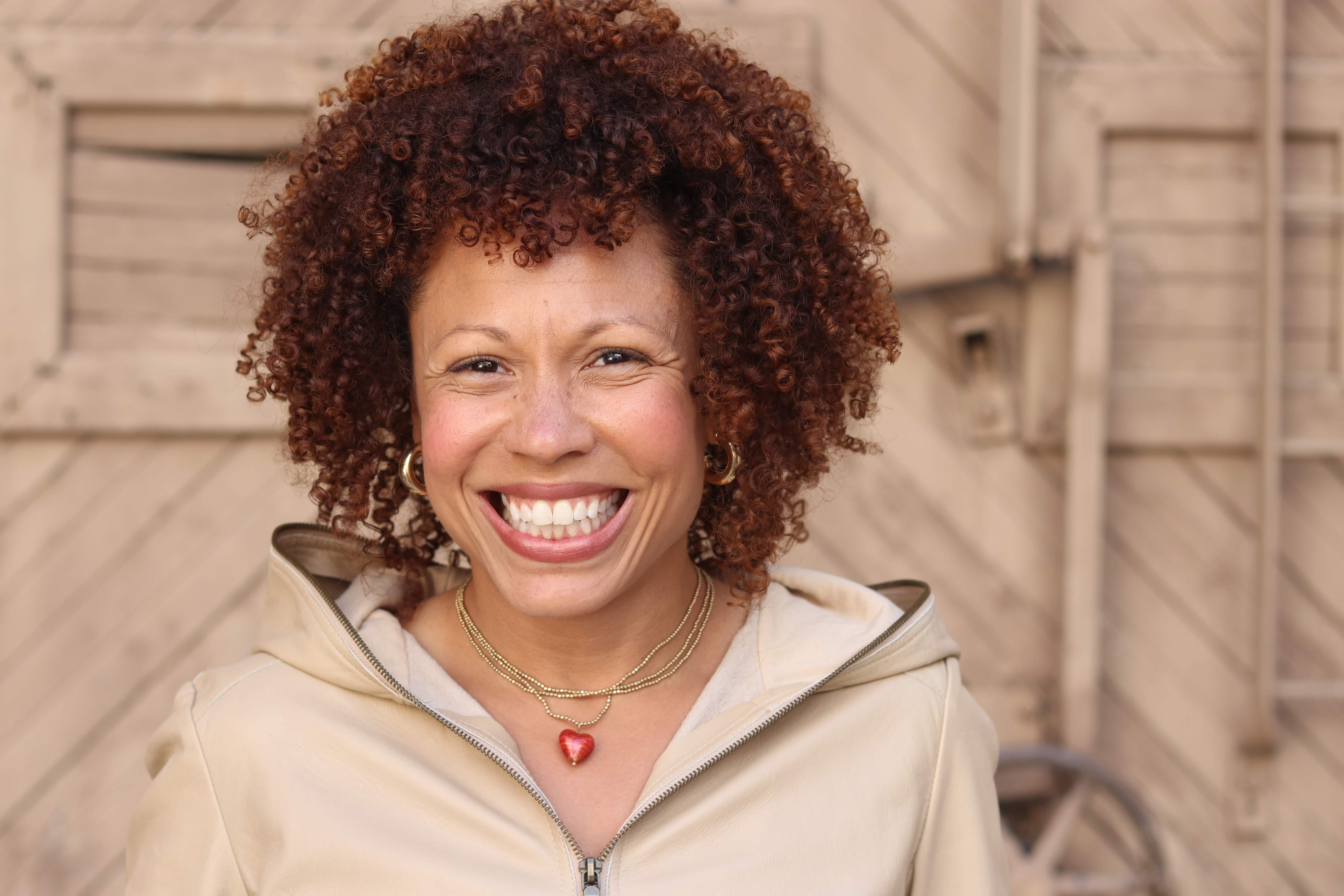
by Angela Nissel
In this excerpt from Angela Nissel’s new memoir Good Grief, Pass the Bread, Mom Is Dead, Nissel explores her close relationship with her mother.
The next morning, I texted my brother.
Me: Mom thinks she’s dying!!
Jack: What the fuck?
Me: She never said that to u?
Jack: Like I wouldn’t hv called u if she had! It’s the stress of
Reverend Bill and the arrest making her say that.
When Mom woke up from her overnight sleep on the couch, she confirmed my brother’s suspicion.
“Who called the cops on Reverend Bill?”
“Me,” I replied.
She frowned.
“Sorry, next time someone tries to hammer my brother, I’ll just turn the other cheek. My bad,” I said, despite knowing that my sarcasm wasn’t one of Mom’s favorite things.
“I have an oncologist appointment on Monday! Who is going to take me if Bill is in jail?”
“I think the better question is, why are you going to the oncologist if you’re supposedly dying?” I said, certain I had caught her in a Sherlock Holmes Aha! moment.
She explained that she was getting a PICC (peripherally inserted central catheter) line. I took that as another point on my “mom not dying” scoreboard. As with lymph nodes, I barely knew what a PICC line was for. My big brain just knew that people who are dying don’t need lines of any kind.
Mom continued worrying about getting to her appointment because, as she told me, Bill chauffeurs her everywhere, even to work every day. She motioned to an overstuffed binder under the coffee table.
“Can you grab that for me? It has the doctor’s number so I can call to cancel the appointment.”
“Nope. You’re not canceling it. I’ll take you to your appointment so I can understand what the hell is going on,” I said, nervous that I was now piling commands on top of my sarcasm.
As expected, she argued. Insisted I fly back home to my life. She still didn’t know I didn’t have much of a life left—or at least the parts we both considered successful. I countered that if I was flying home, she was coming with me. I wasn’t leaving her alone in a house where I noticed she could barely walk up the stairs. She shut down. She didn’t need my help.
“I said no,” Mom said, an edge to her voice that let me know that she was still the parent.
“Well, I’m not leaving. I’ll just move in,” I said, sinking into her sofa defiantly.
***
Bill’s arrest made me resolute to finally become the superhero I’d always aspired to be: Mom Hoarder Extraordinaire.
Since I can remember I loved having my mom to myself. I stayed in her stomach for an extra two weeks and even after the obstetrician forced me out, I dedicated my early childhood to trying to keep her close. I loved her silliness. To wake me up in the morning, she’d play albums on my plastic Fisher-Price record player and pretend to scratch them like a hip-hop deejay. She jumped double Dutch and she could make every cartoon voice from Disney. When she brought Jack home from the hospital, she started sharing her silliness with him and four-year-old me knew I had no choice but to try to kill him.
“Can I push him?” I apparently asked after my mom placed newborn Jack into a baby swing. “Of course,” my mom said, proud that I was stepping into the older sister role so easily. BLAM! I double-handedly shoved the shit out of that swing and Jack would have tumbled right into our ’70s-style sunken living room if not for my mom’s swift reflexes.
When my mom made the unsmooth transition to divorced, single mom, I had to not only share her with my younger brother, but with these two new bitches: Overtime and Double Overtime. Those bitches had always been hovering around, helping our family with Grown Folks Problems, but once my mom became a single parent, they rang our house every night. My mom always happily answered their calls and I didn’t understand why those needy heffas had become so important to her. Hoarding a sliver of my mom’s free time became something young me could only manage on rare weekends when Overtime didn’t call. On one of those weekends, my mother casually invited our neighbors over. They brought their daughter, Destiny.
Now, I usually dug Destiny. She was cool. She played a good game of Red Light, Green Light and what have you. But that day, Destiny was cutting into my Mom Hoard Time. The straw that broke my preadolescent back was when I took a pee break from playing with Destiny. As my little legs dangled off the toilet seat, I heard my mom doing her Donald Duck impression for Destiny. It was bad enough my mom shared it with my brother, but sharing it with someone other than blood? That could not stand.
“Do it again,” Destiny pleaded. As my mom did, I leaped off the toilet seat and snapped. I couldn’t push Destiny out of a swing, but I could use a weapon I’d learned was just as painful. Words.
“Destiny bites people, Mom!” I yelled, while pulling up my pants and dashing out to save my mom from Destiny’s front teeth. “Don’t do Donald Duck for her! She’ll bite you!”
My mom stopped me middash. “Apologize! Now!”
I got sent to my room, losing out on even more mom time.
As I aged into my preteen years, the babysitters who filled in for my mom switched from pleading with me to leave my mom be to lecturing me on how being almost grown meant learning to be without her.
“Other people don’t see their moms because of men or drugs. She’s only gone because she goes to work to take care of you.” She was the tough superhero single mom, a woman who could be both parents as well as the breadwinner and never let her kids see her sweat. Adults often told me that when I was older I’d understand that I was lucky to have a mom who knew the value of working twice as hard.
I never felt lucky, but as I grew up and tried to not be so needy, I started to see the world as she saw it, that working twice as hard was a given. That you never complained about it, instead you kept your head down and struggled as hard as you could in a world that was often cruel to women on their own. Anything else was giving up. Instead of constantly being under my mom, my adult life became dedicated to making her proud by working as hard as she did, even if it meant I only saw her on Christmas. After she told me she was dying, I decided I’d only channel my hard work into making sure she understood that dying was giving up. And like she’d taught me, giving up was something women like us don’t have the luxury to do.
Excerpt from Good Grief, Pass the Bread, Mom Is Dead: A Memoir by Angela Nissel. Published by Amistad. Copyright © 2026 HarperCollins.


Angela Nissel is author of the national bestselling comedic memoirs The Broke Diaries and Mixed, and a prolific television producer and writer whose credits include Scrubs, The Boondocks, and Ginny & Georgia. Prior to her television career, she had illustrious careers as a temp for the IRS, a mid-morning stripper, and a “sleep apnea auditor” watching people snore overnight in a local hospital. She lives in Los Angeles and enjoys beating people half her age in video games.
I was pulled right into this story! Definitely want to find out what happens next… the honesty about the sibling jealousy 😅🤣 I never felt this way about my sisters but I’ve observed other families who have this dynamic. 🙈🫶🏻