


In 2022, I got paid for the first time in ten years when I was hired to teach a four-week “How to Podcast” adult enrichment class for my city’s community education program. During the first session, I showed a dozen eager adult learners how to record a conversation. I fairy dusted podcast knowledge all over my students until one of their hands shot up like a canister vacuum attachment, ready to suck up all of my sparkles.
“Yes, John?” I knew everyone’s name because I studied the registration list ahead of time.
“How do you bleep out a swear word?”
Fuck! I could import audio tracks, fade out theme music, and edit “um”s. But I didn’t know how to bleep. On the smart screen behind me, my cursor fumbled through menu options. The audio editing software I demonstrated was called Audacity, as if a patron saint of insecure community education instructors dramatic irony-ed the name. My shimmery confidence faded into matte insecurity.
“Uh,” I intoned, covering up my experience void. Then I showed John how to cut out a swear word. But John didn’t want a work-around. He wanted to throw a tonal blanket over a swear word, not eliminate it. Leaving profanity in a recording with a bleep on top can be funny, dramatic, and useful to the story, like a tiny toupee balanced on a bald head. I promised to show him next time.
Before the second week of class, I added a new visual aid to my slide presentation about how to bleep in Audacity. Then I recorded a few audio samples to play for my class. While I created my podcast curriculum, I gleamed with professional satisfaction glitter. Teaching adults to DIY their own audio was the perfect convergence of all of my life experiences. I earned a library science master’s degree in my twenties and taught database research workshops when I worked as a reference librarian. In my thirties, I developed active listening skills and infinite reserves of patience while parenting my three kids. Plus, I had co-hosted a hobby podcast with a friend for several years.
I wished it was a bigger job with full-time hours, but it was the only job I could get. A decade earlier, I became a stay-at-home mom, intending to spend a handful of years as a full-time caretaker to my children when daycare for three little kids cost more than my take-home pay. I thought I’d get to pause my career until they reached school age, then hit play right where I left off.
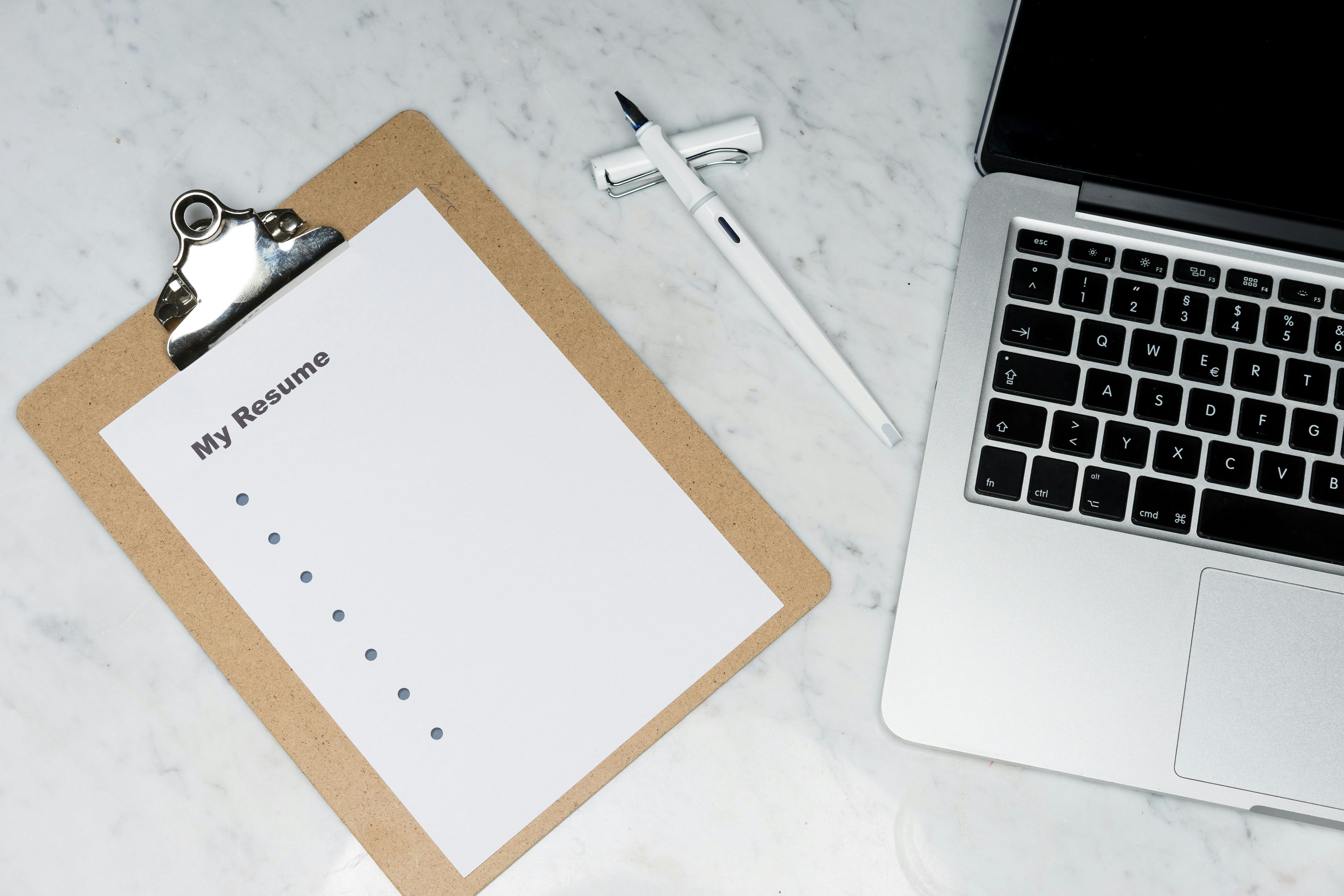
But careers don’t start and stop as easily as podcast episodes. In 2019, when my kids were all in elementary school, I applied for reference librarian positions, but my applications stalled in HR screening. Library bosses didn’t equate parenting with work. Even though I worked hard. All the time. Domestic labor never ends. My failure to finesse my unpaid activities into a bulleted simulacrum of a professional position dragged my thin resumé beneath the surface of the job candidate pool. Then, in 2020, the pandemic and distance learning drowned my fledgling search for a full-time job.
I got the part-time community education teaching job because it required a proposal, not a traditional cover letter and resumé. My submission included an outline for a four-week class and some sentences about my podcast. As for my lack of audio editing expertise, I didn’t lie about my qualifications. I just didn’t know what I’d need to know to teach podcasting. Maybe it was silly to worry about losing a job that paid me for just two hours per week. But it wasn’t the money that I was working for; it was the title. Having a job let me call myself something besides stay-at-home mom.
When it was time for the second class, I wondered what other questions my students might ask that I couldn’t answer. The media center’s shelves of graphic novels and picture books mocked my unemployability with their colorful earnestness, accentuating my inability to land full-time library work. I worried that my students would complain to my boss, who would realize that I was an audio engineer imposter, not a real professional. If he fired me from my consolation prize community education job, I didn’t see how I would ever get paid to work again.
My students liked the bleeping lesson and I regained some shiny self-assuredness. Then Margie raised her hand.
“How do I monetize my podcast?”
Ad revenue and sponsorships? Teaching the class was the only way I ever monetized podcasting. When I divided my wage by the unpaid hours I spent preparing my course objectives, lesson plans, visual aids, and handouts, I only earned nickels per hour. I told Margie about the non-monetary benefits of podcasting. How podcasting, for my co-host and me, was a fun way to spend our limited free time. Like most independently produced podcasts, we didn’t have enough download numbers to join a distribution network. But our recording schedule helped us stay in touch with each other while living in different cities, gave us a space to vent about our kids’ media use, and improved our ability to speak and joke extemporaneously. I promised Margie a better, more lucrative answer in next week’s class.
Before the third class, I made a robust slideshow about content creation and revenue. I didn’t want to feel like a phony, undeserving of my paycheck. Even if it was barely enough to cover a fraction of my family’s weekly grocery bill. Working so many hours for so little money felt like an inverse calculation to how, ten years earlier, I had decided to quit my librarian job and become a stay-at-home mom, rather than keep a job I didn’t like very much and spend my entire salary on daycare. Even though the takeout dinner I bought to feed my kids on the nights I taught podcasting cost more than what I earned from teaching, the paycheck wasn’t the point. I didn’t need to turn a profit on my time investment. The title was enough to make me work hard to keep it.
For my family, it made financial sense for me to stay home. But because there’s no status in domestic labor, I felt compelled to keep pursuing paid employment. Back in my twenties, when I was formulating my feminist identity, I bought into the idea that I needed to get paid for something other than housework and childcare to be taken seriously. I felt bad about being a stay-at-home mom not because I disliked parenting, but because I compared myself to my peers with distinguished and impressive job titles. While I was supporting my husband’s career as the primary parent in our family, my neighbors and friends earned tenure, made partner, and published books.
If we lived in a society without misogyny, with gender equality, with societal support and affordable childcare, I could have weaved in and out of paid employment to full-time parenting and back without being punished by a resumé gap or unemployment stigma. But instead, I had a hard-won, two-hour per week job that covered up my stay-at-home mom shame like bleeps hide profanity.
Before the last class of the four-week session, I pulled open the heavy school door. My boss stood in the hallway. With a clipboard.
“Can I talk to you?” he asked.
He must have discovered that I was a hobbyist without any ad revenue. A podcast poser. An unemployable former librarian. What would I do if I couldn’t say “I teach podcasting” anymore? I would have to go back to mumbling, “I’m just a mom.”
“I want to check on the winter session schedule,” he said. “Can you teach the class again? Everyone’s loving it. This will give the waitlisted people a chance to take it.”
A waitlist! With that kind of demand, my class would remain my class. I looked forward to hearing more student stumpers in the next class. The more hard questions I encountered, the better I got at responding to them. I could keep teaching the class! Maybe, someday, I’d even feel fully qualified. I added the winter semester dates into the calendar app on my phone, then skipped up the stairs to the media center.
I wished all the employers who’d rejected my librarian job applications could see how hard I was willing to work, how nimbly I learned new skills, and how deftly I taught them to other people. But was it work? Was I working working? Teaching podcasting took me away from my real full-time occupation—managing my household and parenting my kids. Teaching podcasting was definitely not work in the conventional making-a-living sense. I didn’t commute or get a hefty ACH deposit. Teaching podcasting, however, gave me a glinting confidence boost. It wasn’t diamond-level sparkle, or even costume jewelry gleam. It was a mirror-encrusted, dollar-store party favor version of a job. And I loved it.
Teaching podcasting made me realize that, for me, work isn’t really about money or time. It’s about dignity. I wish that being a full-time parent could be considered a real job, but it’s not, so “I teach podcasting” became the bleep that covered up my professional disappointment. It was a little noise that disguised my decade-long caregiving career break and all of the domestic labor that made me worthless in the conventional job market.
At the end of the fourth class, I flipped to my carefully prepared last slide, happy to wrap up the class, feeling like a low-paid, very part-time, back-to-work success story until Joanne raised her hand.
“How about theme music? What do you know about copyright law?”
Shit. Bleep!

Deborah Copperud is a writer and podcaster in Minneapolis, MN. Her work has appeared in Current Affairs, Glamour, The Rumpus, HuffPost, Open Secrets Magazine, and other publications. She co-hosted the It’s My Screen Time Too podcast for seven years and independently produced the Spock Talk podcast in 2023. With degrees from the University of Minnesota and University of Wisconsin—Madison, she has worked as a reference librarian and has taught for Minneapolis Public Schools Community Education and The Loft Literary Center. She recently launched the Read Minnesota Books podcast.

I woke up just this morning feeling like the work I’m not getting paid enough to do was a waste of my small life. Thank you for needed reminder of all the ways there are to value a human’s time and efforts!!
"But instead, I had a hard-won, two-hour per week job that covered up my stay-at-home mom shame like bleeps hide profanity." LOVE this parallel. I hope you're escaping from those feelings of shame because from here, you seem like a hard-working badass.