


In 2017, I bought a candle. I had just moved to Glasgow and was living on my own for the first time. It seemed as good a way as any to mark the occasion.
My budget was £40, which made me nervous. But candles in general spike my health anxiety anyway. I remain unconvinced that slowly burning chemical-infused wax in a confined space and actively beckoning it into your lungs is an optimal move. But wasn’t this adulthood?
The deliberations were extensive. It was a small flat, already furnished to its natural limits. Sure, I’d put a giant Chagall poster from The Met’s 1950s production of “The Magic Flute” on the wall. Me liking opera…That was old news. The candle was the thing that was going to signify momentum and change.
The candle I chose came in an opaque sky-blue jar with a wooden lid. I think the intended connotations were both Nordic and coastal. Its scent seemed to hint at both journey and stasis, escape and comfort. Cold sea air, warm celeriac soup, and company.
I didn’t burn the candle for four years.
Not because I’d forgotten about it. I’d often pick it up, turn it in my hands, consider lighting it, then put it back.
It was never a £40 candle evening.
I thought the candle required certain conditions. It was designed to complement an already assured, completed existence, not to try to manifest one. But those conditions kept failing to arrive.
The candle wasn’t meant to improve things in its own small, and possibly carcinogenic, way. It was meant to crown them. To mark a state of being I hadn’t yet achieved. A sense of feeling as though I was finally fully inhabiting a body that had long betrayed my trust. A sense that I was no longer hovering but grounded, present, and enveloped.
This was not a one-off.
Early in the pandemic, I had bought some expensive organic porridge. Something about porridge struck me as incredibly functional. There is nothing ephemeral about a box of porridge. It’s a promise of commitment and consistency.
I wanted it for the same reason I’d wanted the candle: I thought it promised something about the person I was about to become.
It was also a novelty. Normally my colon is too angry and inflamed. To eat breakfast and attempt to leave the house would be taken as the most blatant incitement, but the medical advice for the clinically vulnerable to stay home had removed that barrier.
And yet, I didn’t eat the porridge either. If I did, I thought I would have to somehow honor that for the rest of the day. The day would have to be as functional and satisfying as the meal that started it and I was never confident I could deliver on that contract.
Eating it would also mean accepting that the life I had now, this body, this routine, this constant calibration, was the life where I got to have nice porridge. Not a life where I’d earned it by being well or functional or sorted.
As long as the bag sat unopened, the good porridge could still be waiting for the good life. Both still in the future. Both still possible.
While writing this piece, I searched stubbornly for a photo of the candle. Surprisingly, I’d never given it headline billing in a carefully curated social media shot. Looking back, it seems strange I didn’t try and at least get some bang for my buck.
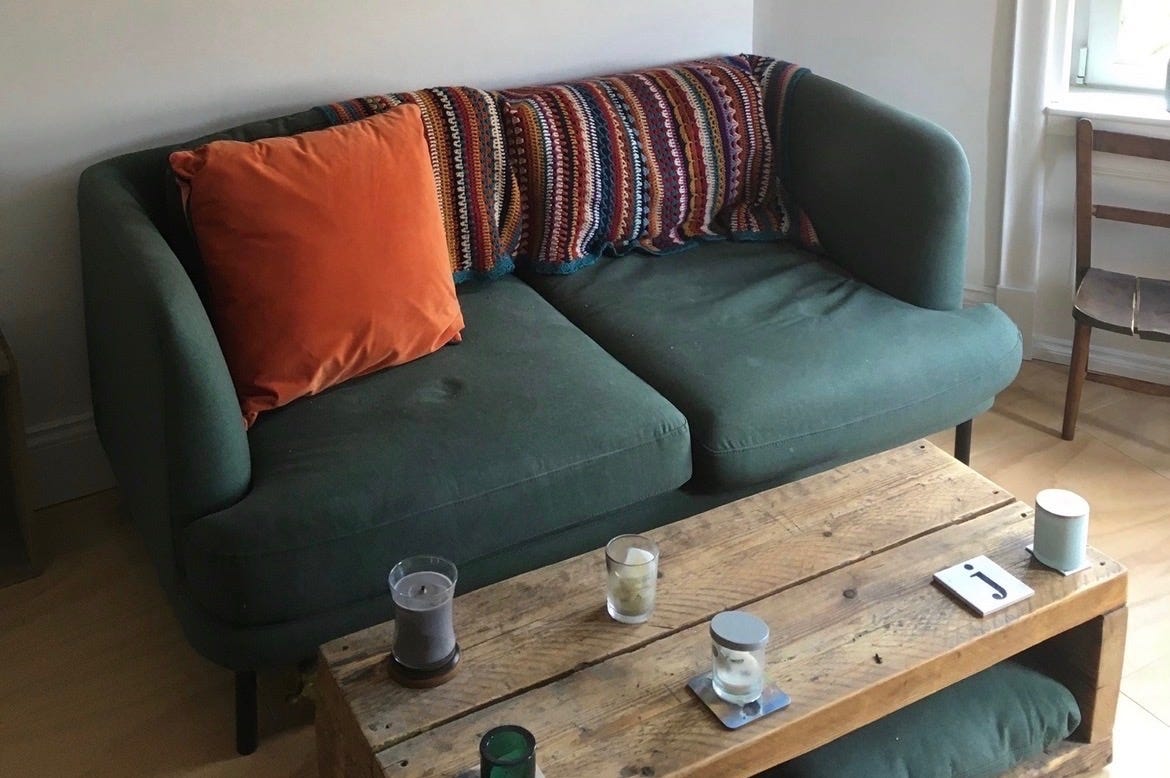
It does appear, though, over the course of several years and several coffee tables, lurking, with its lid firmly on.
I finally burned the candle sometime in 2021. I don’t remember when. I do remember why. A year into the pandemic, my life was so comically far away, further away, from functional, it felt safe to let the candle and its promises burn.
I now buy candles and strike the match. Sometimes the same day. Occasionally, I still catch myself placing small pleasures on the highest shelf, wondering if the day will be right enough to wear my nicest socks. But candles are just companions now, not checkpoints.
Jack Richard is a charity worker based in Scotland. He writes about queerness, disability and the emotional architecture of introversion and containment, with frequent cameos from Mozart and Mel C. When not working, or writing, he is attempting to compose an 80s-style kitsch musical based on the life of Lady Jane Grey, despite having no evidence this is a good idea.
Object-ives features flash nonfiction essays of 500-999 words on the possessions we can’t stop thinking about.
Recommended reading on possessions:
“Uncluttering a life,” by Jacqueline Dooley, The Halfway Path
“#151: 5 NEW THINGS I’VE BOUGHT FOR MY APARTMENT” by CAT MARNELL
“Olympic Polish Team Brought a Smiling Pierogi Plushie With Them and Fans Love the Mini Mascot” by Regina Sienra, My Modern Met
“FROM A WHIFF OF MYSTIQUE TO WITTY LOVE: OVER 200 YEARS OF VALENTINE’S CARDS” by Alisha Haridasani Gupta, The New York Times

A lovely piece and one that truly resonated with me. I burn a candle almost daily on my desk as I work, a ritual I started after my daughter died 9 years ago. But I used to hold onto them for special occasions too. But right after Ana died, I wrote an essay about burning all her candles down because I couldn't bear to let them collect dust. You've inspired me to dig that piece up and potentially republish it. It's an act of rebellion - letting things go.
This is so relatable. I can smell the unlit, and lit candle. This reminds me of Erma Bombeck’s essay “If I Had My Life to Live Over” about using the fine China (back when people had it), the best sheets and towels we saved for guests and all that. It’s so tempting to think we have to wait for the perfect time, which of course never or rarely happens, or we’re doing something else when it does. We’re not at home lighting that overpriced candle or pulling out the special teacups purchased that one year on a trip far away, (this may be my husband), or anything else we feel we don’t deserve to enjoy all to ourselves. Thank you for this post, quietly reminding us that we’re worth enjoying the porridge and/or lighting the candle whenever it feels right.