


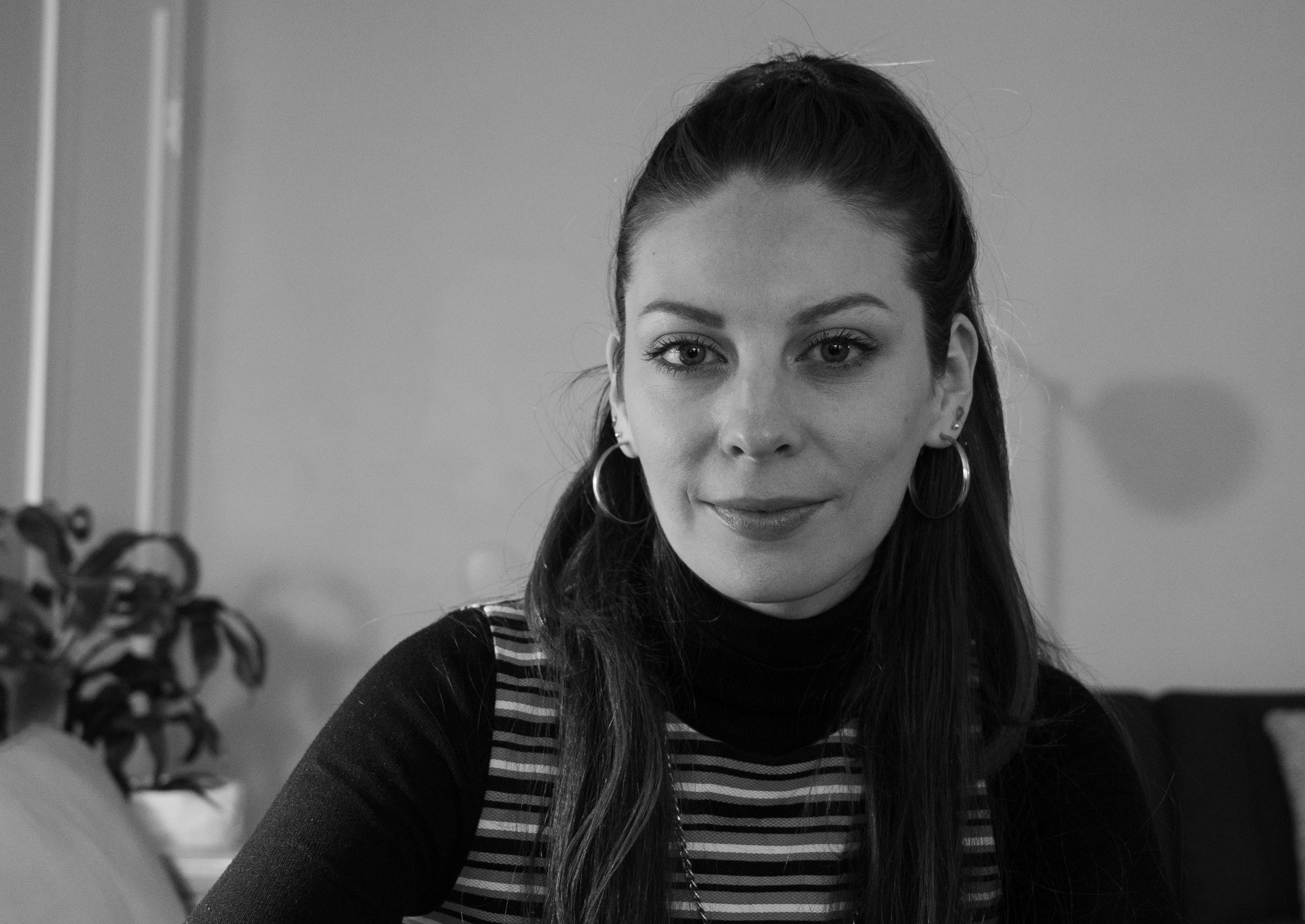
The first time I had a migraine with aura, I was 24. It came on suddenly, just a few days after I met John, a 55-year-old strip club patron who tipped me $400 and invited me out to a compensated dinner. At that time, nobody knew I was a dancer except my family, and nobody else knew I had agreed to meet him at a steakhouse in downtown Denver either. That chance meeting was the seed of a secret that would bloom into an entire double life: three years of working as John’s sugar baby, and the start of a chronic condition that would far outlast the secret world we built together.
At first, I thought the aura was something magical. Sparkling lights spun across my vision in kaleidoscopic pastels—pale yellow, baby blue, and soft pink—as if the universe were trying to communicate with me. They came out of nowhere, hovered in my right line of vision for twenty minutes, and followed me even when I closed my eyes. “What are you trying to say?” I whispered into the dark. The transition from being flat broke to meeting John and getting paid for “my company” had felt so improbable, so fated, that I let myself believe I was one of God’s favorites. Why shouldn’t this aura also be a message? But then the lights dissolved into a sharp, crushing pain, and I let go of the idea that anything about it was magical. I only hoped I wasn’t dying.
Meeting John, on the other hand, really was something magical. I was an undeniably unskilled dancer, but the club paid better than any job I’d ever had—better than sandwich shops, the kitchen at a physical rehab facility, even bagging at an upscale place like Whole Foods. And then, for a glorious few months, I made even more money having weekly dinners with John, no strings attached. No kissing, no touching. Just dinner. Eventually, though, he would proposition me for sex at the rate of $1,200 a week. It felt simultaneously like the most morally fraught decision I could make and like I’d won the lottery. I said yes, and for three years lived in two extremes: the most financially secure and free I had ever been, and the most ashamed and terrified of being found out.
The very first dinner had been nerve-racking. My mind spun with every possible danger: Would he follow me to my car? Force sex if I said no? Had I just opened the door to a stalker? And even worse: What if someone I knew saw me? While I would eventually grow comfortable with John, who was always kind and gentle, that last question never left me: What would people think if they knew?
When people ask now why I wasn’t open about sex work—aren’t people “super cool” with it these days?—I think back to the first time I danced at 19. Believing I had a progressive social circle, I’d been open about the job. I told my friends what it felt like to undress onstage. I told the woman I was dating how I hated giving lap dances, even though that’s where the money was. The reaction was swift and brutal: I was dumped, slut-shamed, and treated like shit.
I should’ve known better. That’s how it felt at the time. It was 2011, and strippers were still the butt of endless shitty jokes. When I give university lectures on sex work now, I often play a clip from Family Guy in which Quagmire takes his friend’s teenage son, Chris, to a strip club. A dancer asks Chris how old he is, and he shoots back, “Old enough to know you’re a whore.”
The satire is obvious, but not all of Family Guy’s young audience was in on the joke. Many absorbed the message at face value: Strippers were terrible, morally bankrupt people who sold their bodies because something fundamental was missing, like, as the punchline suggested, a brain. Looking back now, I sometimes regret the secrecy I kept in my twenties. But back then, I simply couldn’t face the weight of judgment, not on top of the other risks I was already carrying.
But as my stress and guilt mounted—lying to friends, dodging questions, splitting myself in two—I began to feel dishonest in a way that seemed to rot me from the inside out. My self-esteem collapsed. Right alongside it, the migraines escalated. I recognized the correlation almost immediately. Still, I told myself it was worth it. The arrangement was temporary, after all. I had a plan: sugar until I paid off my student loans, got my dental work done, and saved $10,000, a sum I naively believed could stretch across an entire lifetime post-John. I was so poor then that ten grand seemed like a permanent safety net. Now, of course, I know better. In the last few years alone, I’ve had dental bills that toppled past that number. (I wish I were being dramatic.)
I figured that the migraines would subside when the arrangement was over, but when that time came in 2018 and I walked away from John and the most financial security I’d ever had, the migraines persisted.
“Well, they’ll probably stop when I come clean about sugaring,” I told myself. I was no longer actively lying, but I still carried this immense secret. I figured that in order to heal from this illness that had grown out of my double life, I had to tell the truth. So a year later I went on what I liked to call an “honesty trek:” I sat friend after friend down at coffee shops and happy hours and confessed that I had been a sex worker, and I had hidden this from them. Terrifying doesn’t begin to cover it. I spent months preparing, reminding myself of what my therapist had advised: Tell people once you feel solid in your choices so that any outward lashings won’t impact how you see yourself.
I was surprised by the support. I didn’t lose a single friend! I took real joy in the freedom of answering questions bluntly, laughing with old friends, telling absurd stories I’d never dared to tell before. Like the day John took me to the National Mall in D.C., and my anxiety produced such violent diarrhea that I had to beg him to buy Imodium. He did and, unperturbed, he took a series of photos of me that day: flat on the grass with abdominal cramps, posed in front of the Lincoln Memorial, my hair slick with sweat, sunglasses crooked across my face, all the while gushing about my sex appeal. Sharing this shamed and hidden part of myself felt freeing. Like each part of myself had finally entered the same room.
Now this, I was positive, would finally stop the migraines, which had become relentless. I was suffering from one almost daily. But, unfortunately, sharing my past wasn’t the cure I’d hoped for. The attacks intensified. Residual spinners haunted my vision around the clock. My period stopped. I was exhausted, cold all the time, and my body felt as though it had given every ounce to survive those daily headaches. I tried everything—acupuncture, functional medicine, my GP—nothing they suggested helped. I really wanted to believe the migraines were a consequence of the secret life and therefore reversible with honesty, but week after week I lost faith that I could outrun the damage done to my nervous system. Eventually I accepted what I had been trying not to admit: I had a chronic illness.
It’s been six years since that realization and eight years since I stopped sugaring, and I still live with chronic migraine with aura. I see the condition as deeply tied to that secret era of my life. Sometimes I even feel validated by the severity of its consequences. Because living in two worlds had been corrosive. The dishonesty ate at me. The guilt I carried during that time.. still haunts my most restless nights. The migraines feel like a physical record of that cost.
Thankfully, I’ve learned to manage them better. I found a witchy herbalist on Instagram whose holistic approach helped more than anyone else’s suggestions, and I now live by the world’s most hilariously named diet, The Bean Protocol. It’s what it sounds like: beans with almost every meal, no sugar (yep, even fruit), and no gluten.
It’s not a magic fix. Cluster periods still come, and a week of overwork or stress can drop me into a brutal series of attacks. I still hate the migraines—the excruciating pain, the anxiety I feel around planning a full day away from home, the small stupid shit that sucks, like having to decline birthday cake (my favorite dessert )—but I am also awed by the body’s signals. The truth is, the choices we make ripple through our systems. My body had been warning me since the day I met John that shame and secrecy would injure me, and my decision to stay in that dark shadow for years had a real cost. But it’s also taught me to live in the light now. To protect my health, my self-esteem, by living authentically. Not a gift exactly, but rather a lesson learned the hard way.
Michelle Gurule (she/her) is a writer and educator based in Albuquerque, New Mexico. Michelle earned her M.F.A. in Creative Nonfiction from the University of New Mexico in 2021. Her debut memoir, Thank You, John, explores the complexities of sex work, class, power and Michelle’s intersectional identity.

I got migraines at age 24 and was not a sex worker. You needed not carry any guilt about that because it is an inherited condition . My mom and I and my sister and her son all had and have migraines. Diarrhea comes along with them. Bless you 🙏
I JUST read Michelle's incredible memoir over the weekend. It was so engrossing - I read it all in one day. So glad to see her incredible writing here in Open Secrets! :) I'm a Michelle Fan now, and, of course, an Open Secrets regular reader!!! :)