


Things were not a thing in my house.
The emphasis was never on accumulating objects, but acquiring experiences. “Your house can burn down, everything can be taken from you,” my mother would say as she tugged my rambunctious hair into a ponytail. “But no one can steal your memories.” You would think I’d been raised by a wartime refugee, not a middle-class English teacher from San Antonio, Texas.
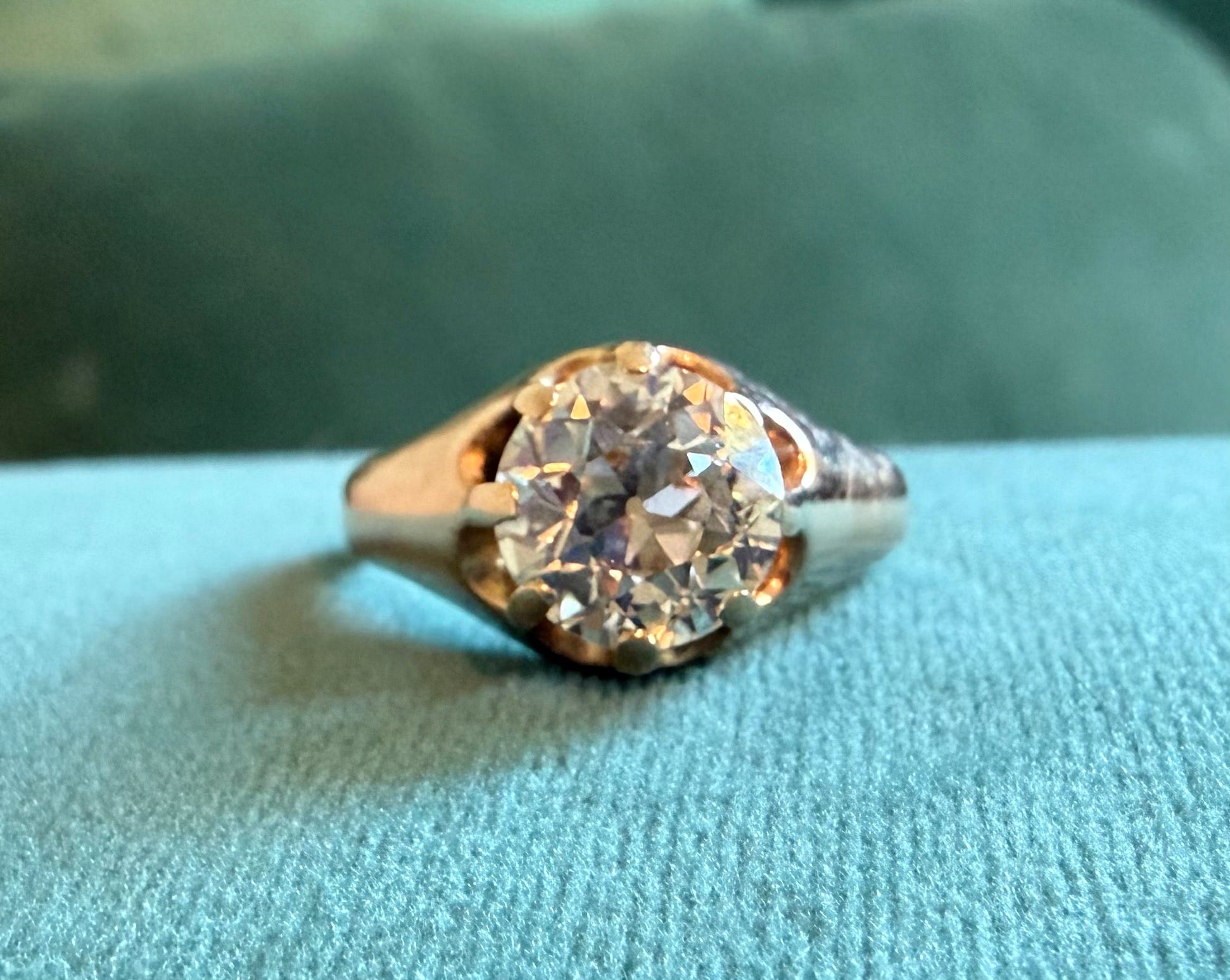
But from the time I could trace the topography of veins on my mother’s chestnut-brown hands, there was one object that transcended experience: a diamond ring whose shine was matched only by its size—2.36 carats. It is, as they say, a chonker. The ring is an octagonal cosmos of cuts and infinite angles. And it carries the weight of the women who’ve worn it through generations.
The story goes that my ancestors were minor royalty (my grandmother Gertrude got a kick out of saying she was descended from a German baron) before they were forced to flee, driven out by the mostly bloodless German Revolution preceding the establishment of the Weimar Republic in 1919. At least, this is what I’ve reconstructed based on family lore and the timeline of my maternal line’s immigration to America. Also, thank you Ancestry.com.
As my mother tells it, the family was tipped off by a “loyal servant” that a mob was gathering to ransack their home and, I’m assuming, do them physical harm. To escape, the women sewed jewels into secret pockets within the folds of their dresses and set out as if on a pleasant ride through the country. They never returned, heading instead for the coast, where they boarded a ship and sailed to America. The diamond ring is the last of this legacy, handed down from one woman to the next until, eventually, it came to me.
I feel the thick gold band with the tip of my thumb and think of my grandmother. Gertrude, or Trudy as she was called, lived through the Depression. Her mother died when she was 15, so she canned spinach at the Del Monte factory in Monterey, California to help feed her brothers. Yet she held onto this precious jewel that told her: You are still worth something.
I don’t know whose fingers carried this ring before my grandmother or how many women gazed into the blinding universe of its Old European cut. But I can feel them, sometimes. They are young, running through the woods on skinny legs, halos of unpinned hair glowing in sunlight. They are rough diamonds, raw and wild, until the world demands they be cleaved, girdled, polished, and inspected—the same process the rock on my finger went through to become something of value to the world.
Was my grandmother wearing this ring when, at 63, she picked up a gun and ended her own life? I don’t know. I do know she was in pain, both mentally and physically. I know she inherited a legacy that demanded resilience. I know each one of us is only so strong. And I know the weight of this ring rests more lightly on my hand than hers.
It was over dinner on my 40th birthday, more than a decade ago, when my mother passed the ring to me. Since then, it rarely leaves my hand. Some would save it for a special occasion, but I don’t believe it was carried this far and at such a cost to live its days in a small, dark box. No one’s going to put this baby in a corner. And, frankly, I need it. It’s the one object I feel naked without. My own personal ring of power.
My relationship with other jewelry? Strictly casual. Necklaces and earrings go AWOL on the regular, with barely a second thought or tear shed. Even my wedding ring is gone. But this ring remains well-kept and coveted until the time comes for me to pass it on.
When it does, my hope is that the next woman to wear it experiences less of the burden—and more of the beauty—than any who came before.
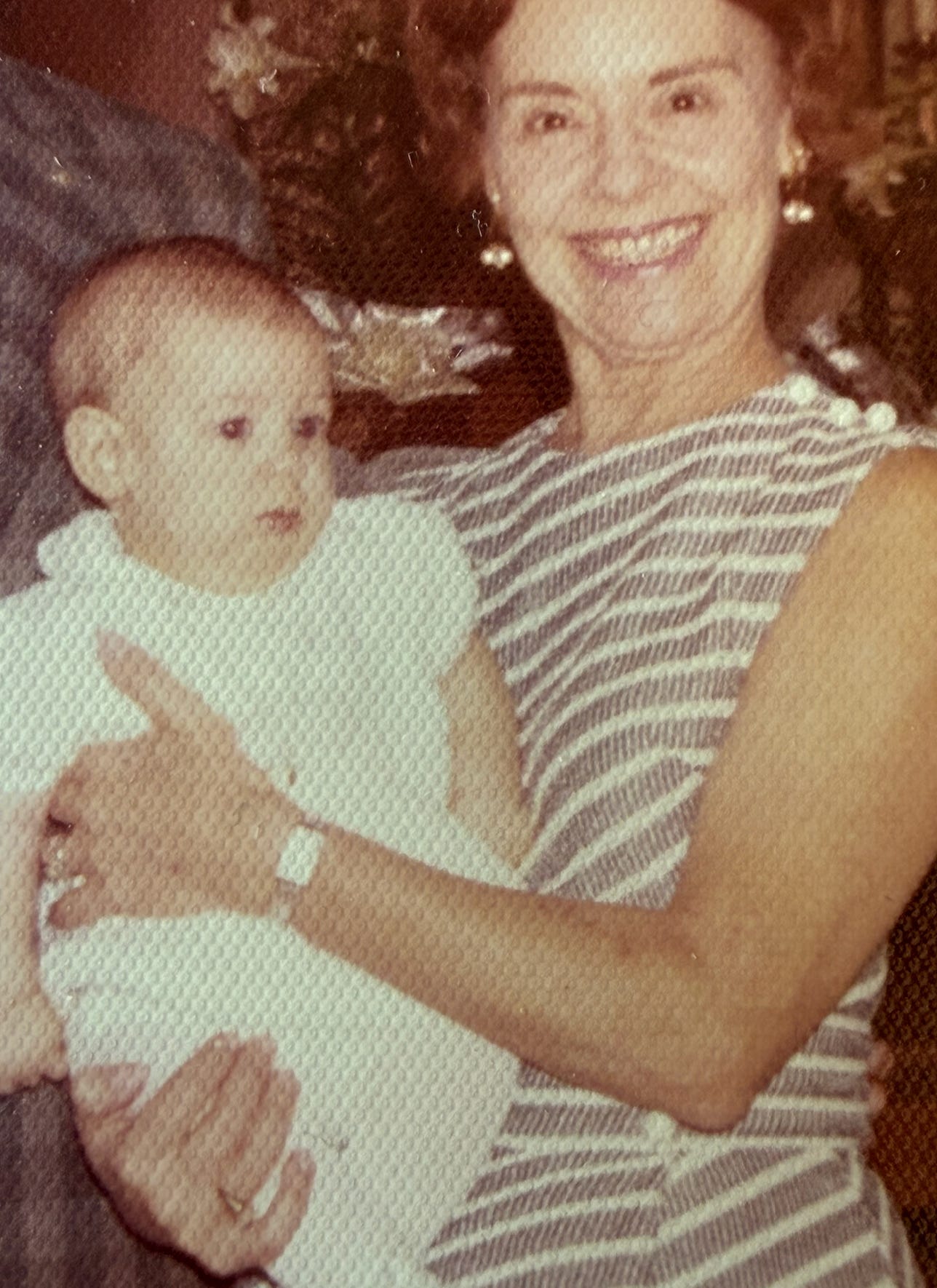

Laura LeBleu’s life has always revolved around storytelling—either as an actor, a writer, or, now, as the founding editor of Geezer, a print magazine for Gen X. Bringing Geezer to life has easily been the most fulfilling creative achievement of her fifty-something years, and she’s thrilled to share this weird, soulful publication with fellow Gen Xers and the world. Find her at Geezermagazine.com and on Substack at @geezermagazine and @dandelioness.
Object-ives features flash nonfiction essays of 500-999 words on the possessions we can’t stop thinking about.
Recommended reading on possessions:
“Stuff I don’t want to own,” by Existential Nuances
“Against Decluttering” by Brenden O'Donnell, Geek Out
“Decluttering Is How You Get Your Time Back” by Masha, Marusya’s World
“Daughter surprises her dad with ‘prized possession’ he sold 30 years ago to help the family” by Heather Wake, Upworthy

Powerful. While the ring is an object, the jewelry's history holds so much legacy, you now rightly honor your family's struggles by wearing it rather than keeping it in a box. That made an impact on me, someone who doesn't think much about jewelry.
Oh wow, what a story of resilience and matriarchy and love. Your grandmother ending her life early is heartbreaking, the things these women went through...my Grandmother's name is Gertrud also. Same kind of Weimar backstory.
I have a few of her gold necklaces passed down from my mother before she died. For me also, the most precious of jewels. Thank you for sharing. These are the stories that keep us connected.