


In the winter of 1999, at age 22, I sat across from my father in his rented condo in Sarasota, Florida, pressed the button of a tape recorder and said, “Start at the beginning,” and he told me of a warplane descending upon him when he was ten years old. That first night of our work together, I considered a little boy, running from a firing plane, then coming home from summer camp to discover his family gone.
How must either of those disasters feel to a child? I asked myself that night as I drifted into a broken sleep. We’d captured the actions of those moments, but not the feelings.
The next day we met again, the recorder between us, and I clicked the button. My father was ready to move forward and tell me what events happened next.
“Hold on,” I said and he looked at me. “How did it feel,” I asked him, to find his family gone? “How did it feel,” I went on, to see their apartment burned down and to be ten and alone, in a city freshly crawling with war? “How did it feel?”
I leaned back, waiting.
“Why do you keep asking me about the first day?” he bit back, with the same domineering staccato he would use to tell me I’d overloaded the dishwasher or failed to take the trash to the curb. The voice felt like a warning. His tone had often frozen me solid, as my protection from an anger that always seemed one infinitesimal mistake away from erupting. He could turn his voice thunderous; use it to put me in the place he wanted me.
I crossed my arms and looked over the table at him. He clicked his tongue and scowled. He stood and went to the kitchen and fixed a cup of coffee his usual way: a splash of cream and two level teaspoons of sugar. I watched a snowy egret drift across the pond behind the condo and waited. My mother passed through the room with a pile of laundry in her arms. The tapes rolled, capturing stretches of silence interrupted by the clink of his pipe against an ashtray, the striking of a match.
He sat again. He shifted in his chair a few more times. “As soon as you see your city almost gone, there is a knot in your stomach. You have that sinking feeling. This just gets worse as you approach your burned-out building. You are hopeful, you are hopeful, you are hopeful and little by little that last hope is gone, too.”
I began recording his stories the winter after I’d enrolled at Oberlin College. My first semester, I signed up for Russian language and history courses, curious about the land my father came from but hardly mentioned.
During a Russian politics course, we watched the 1985 Russian film Come and See, about the 1941 German invasion of Belarus. When the film’s protagonist Flyora returns to his village after the Nazis arrive and finds it abandoned, buzzing with flies, it reminded me of a story my father had told my family, one I’d never focused on. I remembered sitting in our living room, my father relaying the tale of finding his family’s apartment in Minsk scorched, walls collapsed, surrounded by piles of dust that were once other buildings.
I found myself pulled like a magnet to my professor’s office, to tell him the film felt familiar, like something my father described. He asked a question I couldn’t answer: What had happened to my father’s family?
My father had never offered the information and I’d never asked.
Why had neither of these things occurred? I knew only that one day he had a family and on the next he didn’t. His family of origin—my family—felt like characters in a Dostoevsky novel: a grandma, Valentina: an aunt, Rema; and peasant great-grandparents from a primitive village.
I used Oberlin’s month-long winter semester, meant to encourage independent study, as a reason to visit my father in Florida and ask about these people he had lost. My parents were snowbirds by then, spending winters down south. My father reluctantly agreed to the interviews but wondered aloud why any professor would offer academic credit for having him talk about his past.
Our early recordings were slow, a mixture of my relentless refrain of “how did that feel” and his hesitation to connect feeling to the actions. He rolled his eyes at me again and again, indicating I was ridiculous to want to know how his experiences of war felt. The best I could do was not budge, wait him out, ask the question again. I wanted to know from his point of view, because I couldn’t imagine what he had endured, because I had not experienced war myself.
He eventually detailed the hunger he felt waking each morning, unhoused and orphaned, on the streets of Minsk, Belarus, with German tanks now roving the roads of his home city.
“How does hunger feel?” I asked, because he’d made certain I never knew hunger and I didn’t know how hunger borne from food scarcity felt. There was always food available in our home. My father described an all-consuming ache in his belly. Before the war, he always had access to food and never had to think about finding it himself and now suddenly, with his apartment gone and his family disappeared, his waking hours were dedicated to begging for or stealing it. It was the foremost consideration of every moment and the work of every single day
After I shut off the tape recorder at the end of the day he described this hunger to me. I sat on the condo’s salmon-colored couch staring at the local news blaring through their television, exhausted by what he had shared. My father sat behind my mother and me at the dining table and tapped his pipe against the ashtray.
“Don’t you feel bad for me? Don’t you?” he asked.
I turned to him, saw his face scrunched up, his eyes pinched nearly closed and moist. I walked behind him, hugged his neck and kissed his nearly bald head. “Of course I do, Papa, of course I do.”
What else to say? I did feel bad for him.
“How come you’re not telling me about people?” I asked, when we spoke about a time in 1945, after he had escaped a newly unfolding conflict in Belarus and found refuge in Germany and was running again—this time from the BMW plant where he worked, to bomb shelters. This time it was Allied planes that dropped death from the sky.
“I know about the workers in the factory, that they existed, but none of their details. It seems like it’s just you,” I said.
“I told you about Zigmund and Luda,” he protested, naming two people he had met at a Displaced Persons camp in Germany who would eventually become his godparents.
“Fair enough,” I answered. “But that’s it. Where are all the other people?”
He cradled the black plastic pipe tip between his teeth and paused. He exhaled. “Once you make a friend and that person dies from the bombs and it keeps happening, you stop making friends,” he said, strumming his fingertips on the table where we sat, as he looked at me to understand.
At dusk I sat outside by our pool. Alone by the bubbling water, the filter humming, I looked up at a sky devoid of aircraft, but I kept imagining a plane breaking through the walls of our house. My father joined me, filling his pipe as he sat. I told him my fear. He had known that fear, he said. He had seen empty skies too. This hush, he said, was good. Precautionary. He wasn’t afraid of this sky and America now was not Russia then.
The fall months of 2001 passed, and we closed in on the end of recording his stories. He recounted his immigration to the United States on the USS Sturgis in 1949 when he was eighteen. He had heard of the United States as a land of promise for immigrants, where he could have any life that he wanted if he worked for it. He told me about falling for my mother at a St. Patrick’s Day dance in Chicago in 1950, when all he could say in English was, Would you like to dance? and how she abandoned the boy she had come to the party with to swing with my father to Glenn Miller’s “In the Mood.”
He detailed their eventual move to Boston so that he could attend MIT, how he wanted to go to the best possible engineering school, because he felt that was the best way to land the best job that made him the most money, so that he could support the family that he and my mother wanted to create. He told of raising a family, sharing with me anecdotes about each of his thirteen children, as I steered clear of what he wasn’t saying about his drinking, his violence, the pervasive tautness of my childhood home, where we all stepped around him as if he were a human landmine. At the time I didn’t have words to ask him about the atmosphere of our home, where his children loved him but feared his brutality most of all.
Maybe I wasn’t ready to hear what he had to say about it, or I was afraid to push, worried he would stop talking if I did. If there are omissions in the tapes that feel like wasted opportunity, this is one.
After we finished our interviews in January 2002, I continued living with my parents while I looked for my first post-college job. One day, I was in my bedroom practicing a song I had no business attempting, “Reflection,” a ballad off the Mulan soundtrack recorded by Christina Aguilera. In the song, Mulan’s character wants to be seen by her father as a warrior who is brave and capable, in a time and place where girls weren’t supposed to be either of those things. I sang it an octave down and it sounded silly coming from a baritone’s mouth, but I related to the message of wanting to be seen as I was, in a world that didn’t want to see me. I finished singing and heard little noises—light footsteps, the scuffle of slippers—outside my door.
“You sound beautiful, son,” my father said when I opened the door and found him there.
He would use that word to describe me. “How’s my beautiful son?” was his greeting for me most of the time now.
Lodged in my memory were the other words he called me in earlier versions of both our lives. Fat. Ugly. Stupid. The monster of my childhood was now calling me beautiful on a daily basis. I tried to hear it, tried to make room for new ways of being with my father. I couldn’t help having a childlike reaction to his new sweetness and feeling resistance. I actually rolled my eyes, waiting for the monster to reveal himself, to upend the pleasantness.
“I want to talk to you, son,” he said to me one day, early in 2002, as I was heading out for a run.
“What?” I asked with a jerk of my head, wanting to get out the door.
“I am going to die soon,” he continued. “And I want you to know what you should do for your mother when I am gone.”
“Why do you think you’re going to die?” I asked. “I just know,” he said. “Just write this down.”
I wrote his instructions on a piece of torn-out notebook paper. He directed me to all his bank accounts, what I should do with each and how I should make sure my mother had everything she needed. He gave me a hug when he was done, his tears wetting my running shirt at one shoulder.
As I jogged out of the driveway, I looked back at the house, thinking that what had just happened was a little bizarre, but not unsurprising. He’d been sick for a while, with no answers from the medical establishment and no plan provided for recovery, despite countless referrals and meetings with specialists. “Not dementia.” “Something else.” “Don’t know what,” they said. He’d gotten worse, unable now to drive himself a few miles without forgetting the way home. He was 73, still spry, still walking around the yard and the neighborhood with my mother, but after all the medical dead ends, he was realistic enough to think he might not escape whatever this was and it frustrated him.
Throughout his life he had relied on his body and mind and his ability to adapt, to escape what was meant to kill him. He’d excelled at it. This time, despite a team of physicians, despite tracking the course of his illness, his body and mind seemed to be conspiring against his will to survive.
Because of our work together, I knew that the man crying on my shoulder in 2002, the one certain he would die soon, was his most recent incarnation. And like his previous incarnations, his current condition was driven by necessity. Because of what the world demanded, even his name had changed. He had been Volodya, the child separated from his family by a Nazi invasion, then Wolfgang, the pre-teen taken in and raised by the very Nazis who engineered his abandonment. From there he became Władysław, the young, displaced person delivered from the Germans by the United Nations to the shores of the U.S., where he learned to be Walter.
Walter. My father. My tormenter. My interview subject. A force that drove my own life’s changes and incarnations. Over 50 hours of recordings, we sat with one another, each of us asking same question: Who, exactly, are you?
It’s been nearly a quarter century since his death in early 2002 and still I must ask myself, Who exactly was my father?

From War Boys: A Father and Son Memoir by Jason Prokowiew. Reprinted by permission of Trio House Press.
War Boys is our November 2026 Open Secrets Book Club selection.

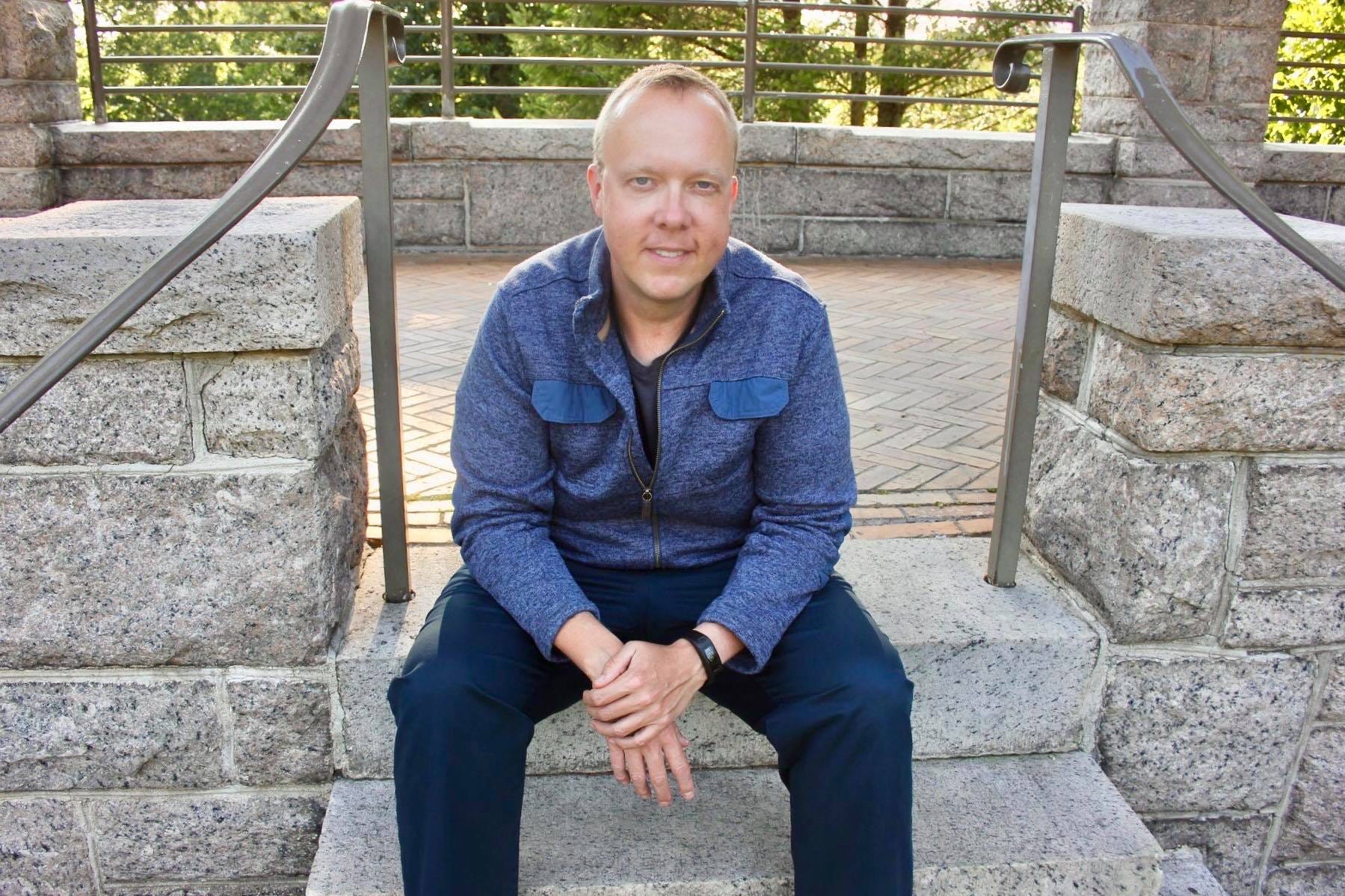
Jason Prokowiew won the 2023 PEN America/Jean Stein Grant for Literary Oral History, a Fulbright Scholar Award, and the Aurora Polaris Prize for Nonfiction for War Boys, his braided memoir about his Russian father’s adoption by Nazis during World War II and the trauma his father carried into parenthood. His writing has appeared in The North American Review, Under the Sun, The Guardian, Salon, Roxane Gay’s Emerging Writer Series, “The Audacity,” WBUR’s Cognoscenti, Brevity, Business Insider, and on PBS/WORLD Channel’s Stories from the Stage. His Stories from the Stage piece, “Sing,” has over 2.6 million views on Facebook and is the most viewed in the show’s history. His essay “The Demulcent of Shame,” originally published by Roxane Gay, won the 2023 Lascaux Prize for Creative Nonfiction. He’s received additional support from Bread Loaf, Ucross, Tin House, Ragdale, and the Mass Cultural Council. A recovering disability attorney, he lives on a lake in Massachusetts with his husband Dave and their greyhound Champ.
Find out more at warboysbook.com

You’ve put words to my conundrum of how to see and adapt from knowing the parent who was a violent tormentor to one who becomes loving. The fear lives deeply embedded while the heart risks opening to and accepting the latest version.
As a son writing a memoir about my own father, this piece really spoke to me. I've interviewed my father too, his trauma history looms large, and the way I relate to him as an adult is very different than in childhood. So these themes were really resonant, and I admire the way you hold a multitude of perspectives and emotions even in this brief excerpt. Thank you for sharing it!