


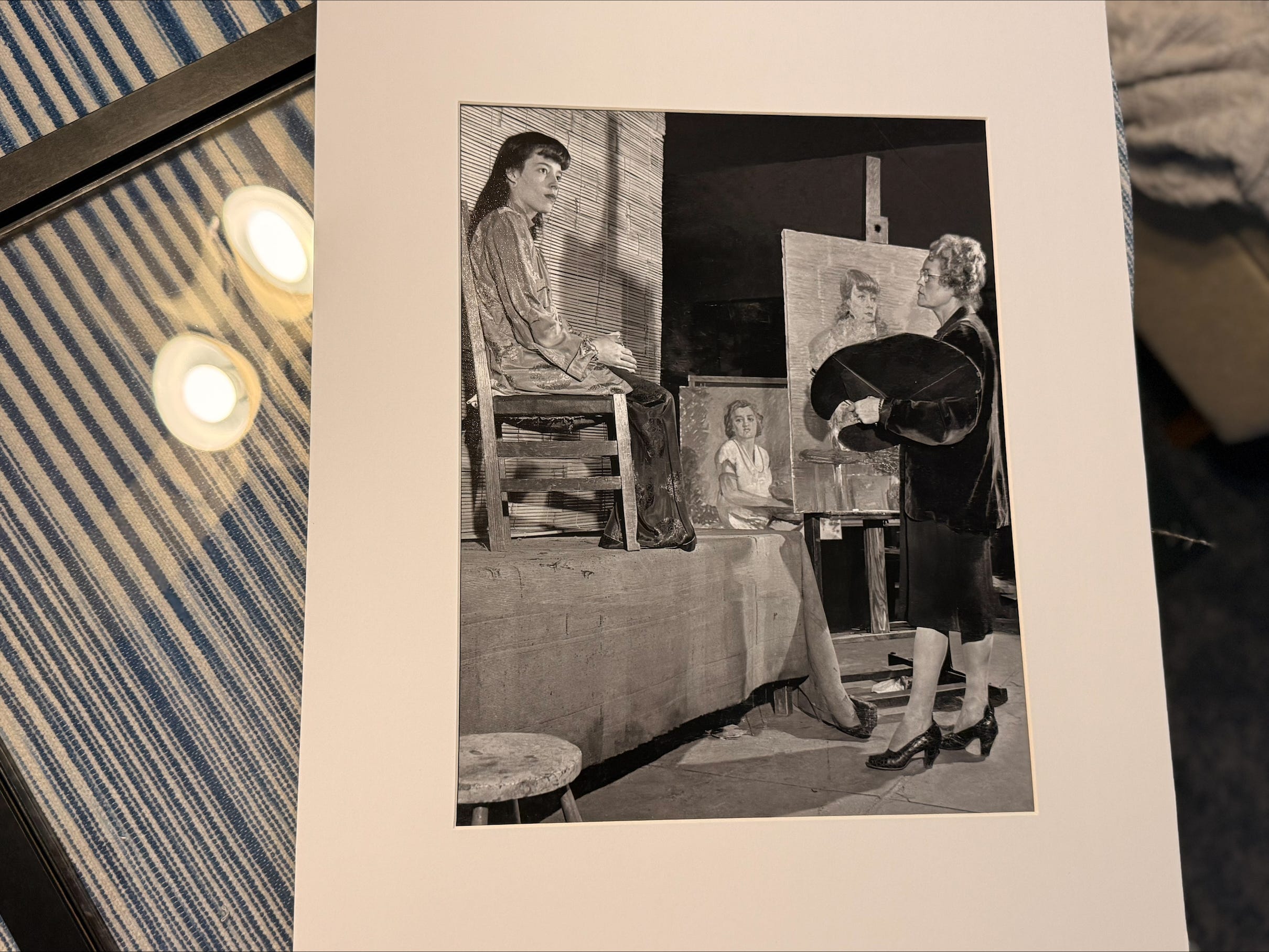
It’s been said that a picture is worth a thousand words. It’s true. Something visceral happens when we view a beautiful image. Something emotional, deep-seated, often physical, happens. It’s like being suddenly awestruck.
That is how I felt when I found two long, forgotten photographs of my mother, tucked inside a file box, buried for almost 70 years.
I’d gone to Sun City to help clear out her home when she died suddenly in 2015. Later, I was told she sat down after phoning a friend and, in a second, was gone. She didn’t suffer. For that, I am grateful.
My mother and I had a very difficult relationship my entire life. She was a demanding and critical parent, often verbally abusive. Growing up as an only child, she had been spoiled and fit all the key points of a narcissistic personality. She sometimes blamed her plight on her two young daughters. Her constant consumption of alcohol didn’t help matters any. After a binge, she often said the most disturbing things to us.
She once told me I was an ugly, scrawny infant at birth. WTF?
One night, on a summer break from college, after consuming staggering amounts of booze, she pointed her finger at me and said, “I know why you’re so f+++ked up. I left you home alone when you were a baby whenever I went to the laundromat.”
“Charming,” I retorted. “You’d have lost custody if done in this day and age.”
The night I was getting ready for my senior prom, she barged into the bathroom and started bullying me about my flat chest. She then said her body was ruined after my birth. Her sagging breasts were my fault.
Who says these things to a daughter?
So why couldn’t I part with the two professional photographs of this woman, which had been taken by a Des Moines Register newspaper photographer in the 1940s, that I discovered and hauled home to Long Island after her house was ready to sell?
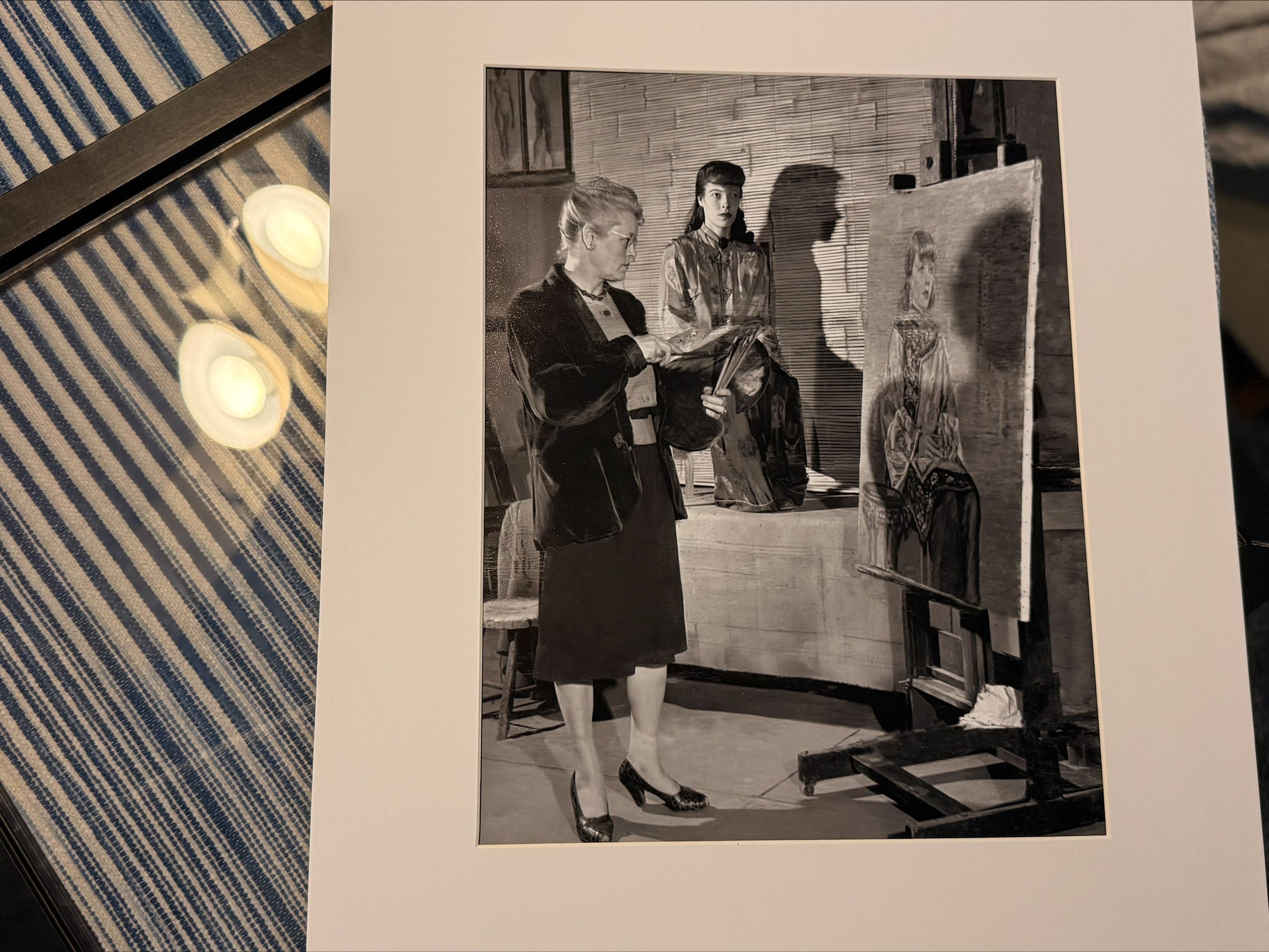
Both photos were ruined, almost beyond repair: rolled up, riddled with cracks, rips, and age spots. Still, there she is, a young, lovely twenty-something posing for a local Des Moines, Iowa artist for extra money. The clippings pasted to the back were proof.
Sitting in an old cane chair, she’s draped in an exquisite, embroidered silk kimono, her thick black hair streaming down her back, a celestial beauty, looking somber while the artist works.
I was compelled to save them.
A new photo shop had opened in town, so I called to ask if they did digital photograph repair.
They did. I took them in for restoration with no concern about the cost.
A few weeks later, a shopkeeper delivered them to my home. The restoration was excellent, far beyond what I had imagined, without a single flaw, just perfect.
I quickly logged on to Amazon and ordered two 18" x 22" large black wooden frames complete with matting. They were the ideal complement to my mother’s black-and-white 1940’s photographs.
Everyone said I was a fool for having these ancient photos repaired, especially since the woman was no longer living, and what’s more, paying about $200 a piece for the restoration.
I disagreed. I needed to honor this woman who bore me, as difficult as she may have been. I simply needed documentation of what could have been before her life got in the way, before age, motherhood, and alcohol were her undoing.
Today, these two photographs of my mother now grace the walls of my apartment. I admire them every day.
Sometimes people ask, “Who is that lovely girl?”
“That’s my mother,” I say, “when she was young, hopeful, and full of promise.”
Despite our tangled past, I’m glad I own them. They depict a brief moment in time. They are a valued, tangible homage to the woman who gave me life.

Dianne Moritz, a former teacher in Los Angeles, is a bestselling picture book author with five published books, hundreds of poems for kids, and poetry, essays and memoir pieces for adults. Her book, 1, 2, 3 By the Sea, has sold over 117,500 copies and is still selling after twelve years. She has joined the ranks of Chicken Soup authors, with her essay “The Late Bloomer,” in their book, Just Say Yes, released in July 2024. Follow Dianne on Facebook and Substack.
Object-ives features flash nonfiction essays of 500-999 words on the possessions we can’t stop thinking about.
Recommended reading about possessions:
“My first crack at Swedish Death Cleaning” by Joyce Maynard, @ Home in the World
“Getting rid of what I love” by Elizabeth Marro, Spark
“Shoplifters of the world, unite!” by Cleanup on Aisle Five author Ann Larson at One Signal Publishers
“A White A-4 Paper That Warms Me Like an Old Friend’s Hug” by banchiwosen woldeyesus at The Republic of Letters
“How my commonplace notebook has enriched my experience of reading” by Petya K. Grady, A reading life
“The baggage I carry” by Grace Michelle, My Inner Monologue
Diane, you dive deep beyond judgment, digging through pain and anger to rise up with words shimmering, as the re-done photos do, for all of the complexity.
Your story is the first thing I read upon awakening this morning. As I get older, I see my parents as people. People with their own flaws and struggles.
I'm widowed twice. It was hell. I wanted my mom just to be near me.
Thank you for your powerful story.