


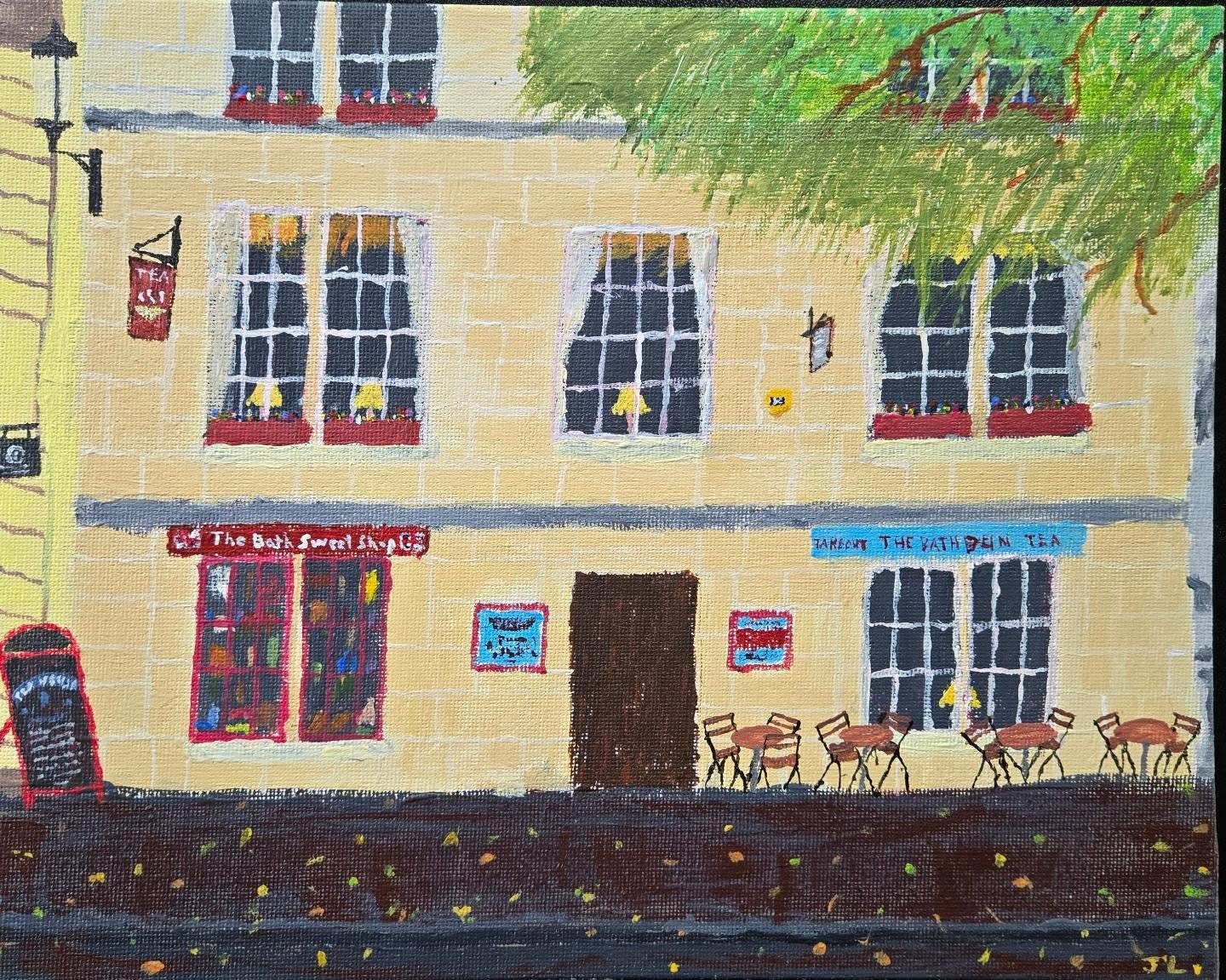
“If a thing is worth doing, it is worth doing badly.” G.K. Chesterton
I am a writer. I have always been but didn’t really take it seriously until my late forties. I’ve published memoirs, fiction, and poetry, and absolutely love the craft and the process. I’m resolved that I’ll never get rich doing it, but I realize that is not why I write. I do it because I can’t not do it. There is a line in the John Lee Hooker song, “Boogie Chillen” that goes, “Let that boy boogie-woogie. It’s in him and it’s got to come out.” That’s me, only with words.
When I retired in 2023, I knew much of my daily routine would be spent at the keyboard, but I was eager to pursue new interests, activities I never had time for before. In my first year, I rowed in an eight-person shell in a “learn to row” class and even tried curling at a local curling club. I took a pottery class and made some terrible pottery, but also a couple of pieces I was very pleased with. I found all three activities to be much harder than they looked. Through these pursuits, I discovered I enjoyed pushing myself out of my comfort zone.
I was also resolved to try my hand at painting. I had done nothing remotely artistic since eighth grade art class. I’ve never considered myself an artistic person, despite my knack for the written word. I always held writing as different from art, which I thought was much more difficult. Even so, I was determined to see if painting and fine arts were something that could be learned or maybe dredged from the depths of my muse. If there’s one thing that my writing has exposed, it’s that our imaginations are capable of amazing things if we set them free. I hoped that if it worked for writing, maybe it would translate to the canvas.
I started slowly with a few paint-by-number kits. I realize this is an artistic cop-out and something that a trained monkey could do if you’re good at training monkeys, but I wanted to ease into it and get a feel for spreading paint around. My first piece was the “American Gothic,” the classic portrait featuring the stoic farmer and wife in front of a barn. The process was tedious, featuring 46 different colors painted in small spaces with hard to read numbers. Tediousness aside, it was deeply rewarding watching the picture come to life as I went. When it was finished, it looked like the authentic portrait, but only if you viewed it from far away and squinted a little.
After a few of these entry-level paint-by-number kits, an artist friend encouraged me to go rogue and start painting freehand. I was apprehensive about beginning, so asked my son to give me a quick lesson. He’s pretty good with oils and has been working on his technique more and more recently. I figured he could show me the basics and get me started, even though I was using acrylics.
I chose a recent vacation picture of the mountainous Quiraing region in Scotland as my subject. In hindsight, it was likely too ambitious for the likes of an artistic rookie like me. The photo had multiple shades of green, impossible-to-portray contours and depth, and a hazy, cloudy skyline. Nothing like jumping in with both feet.
The training session went as well as could be expected. He showed me how to sketch major lines and focal points, set down a base layer, and the basics of mixing paint according to the rules of a color wheel. From there it was all me, and the first couple of iterations looked the part. My work was flat, two-dimensional, and composed entirely of too much dark green. My first lesson learned was, it’s better to start too light than too dark.
As I struggled to bring out depth and realism, I found some tricks that worked. I managed to bring a rocky cliff into the foreground using a rounding technique. Then, I successfully moved a mountain into the distance using color and shadow. But these successes were dogged by too many shades of green stemming from multiple attempts to fix the dark shade I’d started with.
It suddenly occurred to me that painting was much like my experience in the rowing shell or on the curling ice; it was much harder than it looked.
Somewhere along the way of that first lesson, the process captivated me. I was determined to learn from my mistakes and do better on the next piece. I also seriously enjoyed the focus it required, the trial and error, and the peace it provided me. Spreading paint was cathartic, even when I realized I’d made a grave error or bad color choice. It was all part of the learning process, I surmised, so I pressed on with a goal of “not perfection, just improvement.”
I have been at this new artistic hobby for three years now, and what is becoming most apparent to me is that I’m still a writer, not an artist. If you look at my art, it reveals this. Joking aside, though, painting has become part of my life and fills a different niche for me. I think everyone has artistic tendencies or potential, but like anything else, it takes practice and dedication.
As I paint, it seems my brushstrokes fire a different part of my brain than keyboarding. It feeds something within me. The satisfaction I get when someone says, “I can see an improvement in your work,” motivates me toward my next project. I’m a big advocate for lifelong learning, and my art, as bad as it is sometimes, has given this stage of life new meaning. I’m glad I followed my instinct and gave it a chance to bloom. Can guitar lessons be far behind?

Jim Landwehr has published a short story collection, All That It Seems, and four memoirs, At the Lake, Cretin Boy, Dirty Shirt and The Portland House. Jim has also published six poetry collections, Tea in the Pacific Northwest, Thoughts from a Line at the DMV, Genetically Speaking, Reciting from Memory (eBook), Written Life, and On a Road. His nonfiction, fiction and poetry have been published in numerous publications and magazines. Jim currently serves on the board of directors for both the Wisconsin Writers Association and the Wisconsin Fellowship of Poets. He is retired and lives with his wife, Donna, in Waukesha.

Jim, This is a lovely picture. I've also found myself exploring other aspects of unknown talents I'de never realized I had. It's like opening up Christmas presents! What a joy these surprises bring!
I enjoyed this essay and applaud your artistic adventures. It's never too late to explore our creative side. Or sides in your case.