


The décor of my childhood bedroom burst with the white and red of baseballs, the brown of footballs, the orange of basketballs. I hated those colors.
One year, Santa brought Jen, my older sister, a large, shiny, pink Easy-Bake Oven. After mixing water and a little packet of sugary powder, it would deliver delicious-smelling little cake patties. She’d spend hours decorating them with icing and sprinkles. She swirled blue and white, purple and yellow. Watching her craft the color combinations was all I needed. Of course, I wouldn’t have minded a taste, but sharing dessert was a bit too much to ask of an older sister.
Because I was a boy, Santa brought me a Creepy Crawlers Bug Maker. Like the Easy-Bake Oven, the Bug Maker heated molds to be filled with a pre-portioned concoction; but instead of sugary treats, it produced inedible, stinky, rubbery bugs. Boys were to hide these in their sisters’ dresser drawers and drop them into their mothers’ purses. Boys, I inferred, were not to produce anything that could be enjoyed. Boys were meant, even when they baked things, to create fear.
Nonetheless, I sought some enjoyment in selecting goop of my favorite colors—pink and purple—to yield fantastic magenta fireflies and scorpions. It would be ten years before I’d be able to connect my unspeakable tastes to the truth of my identity. I was a queer kid. It was quite simple. But in my early 1990s suburban world, queerness only manifested as the nefarious threat of AIDS, or as sitcom interior designers. It could never be used to describe a little boy. And yet, queer is what I was—ever so quietly, confusedly. So, I spent my childhood accumulating piles of unused orange and green goop packets, which, to this day, I’m sure, remain undegraded, perfectly preserved, in a landfill somewhere: abandoned monuments to an overdetermined masculinity.
Like her Easy-Bake Oven, I admired Jen’s collection of Baby-sitters Club novels from afar, out of fear of being caught curious. Each Baby-sitters Club novel was distinguished by its own color and seemed to center on one girl out of an ensemble cast of babysitters, whose names I would never know. I admired the collection lined up like a horizontal, pastel rainbow, noticing which colors Jen had the most of, wondering if the colors indicated a meaningful pattern or if the colors were random. The magic of color seemed reserved for girls’ possessions. For boys, variation and exuberance was taboo.
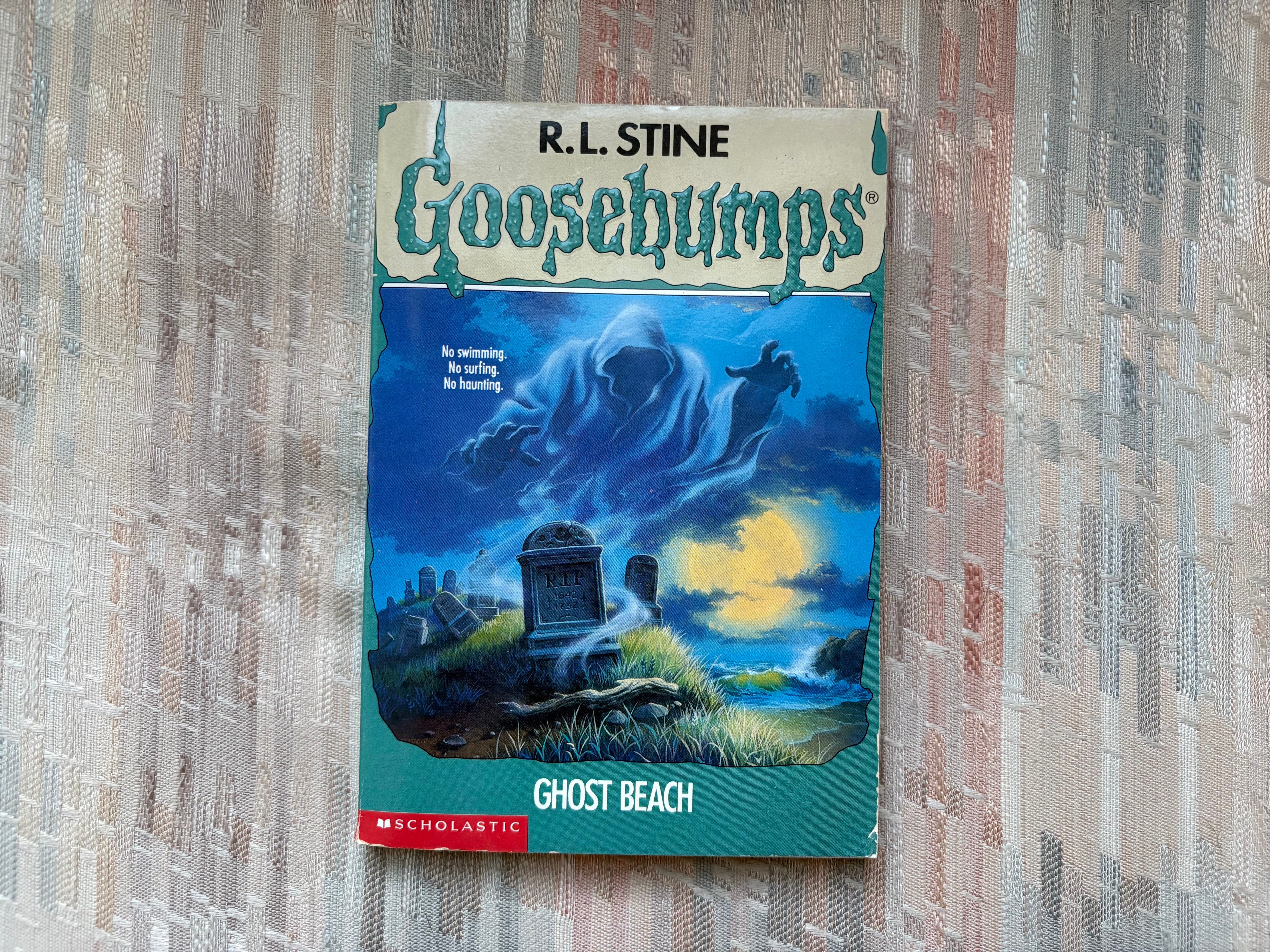
The Baby-Sitters Club series had R.L. Stine’s Goosebumps as its masculine corollary. However, unlike Creepy Crawlers, Goosebumps didn’t feel like consolation. I hungrily collected these R. L. Stine books when I learned I could read them without raising any suspicion. My parents worried about me reading Goosebumps books, but their concerns, in my mind, were for the right reasons. They weren’t worried about me being insufficiently masculine; they were worried I would be afraid and have nightmares. I could leverage this concern, insisting I wasn’t sissy enough to let a book scare me. I was telling the truth, too: They didn’t scare me. They fascinated me. I cared less what happened in the novel itself than I did about the cover designs. Each book paired two unique colors against each other, putting into relief the gleaming, embossed word “Goosebumps” arching over the top of each book.
In Ghost Beach, my favorite of the 62 Goosebumps novels I collected, protagonist Jerry and his sister, Terri, visit distant cousins in a New England beach town. After meeting a trio of siblings, the five kids discover a mysterious cave where they encounter a strange man who they mistakenly identify as a ghost. They devise a ghost trap, but in the process of enacting their plan, Jerry and Terri discover that, all along, the three kids they’d befriended in the beginning of the story turned out to be the dead ones. The old man was a ghost-hunter—a good guy. Jerry and Terri had to venture into the unknown to reveal the truth, and that revelation changed everything. Most Goosebumps novels contained a brilliant twist like this, and often centered on a brother and sister pair of siblings, like me and Jen.
The novel’s unique teal and cream color combination would permanently, synesthetically tie the discovery of ghosts to the gentle, neutral blues and tans of the beach. My favorite entries in the series correlated perfectly with my new favorite colors, suggesting a chicken-egg quandary: Did my enthusiasm for the color shape my reception of the book, or did my love for the stories I read influence my favorite colors?
I’ve grown into the kind of person who often buys a book simply because it’s the right size and shape. Slightly larger than a trade paperback, thick enough to fan through the pages with my thumb, never a hard cover, and preferably no deckled edges. I prefer a book whose color pops out, juxtaposed against whatever publishing trend is monochromatically painting the shelves. If a book violates any of these preferences, I’m less likely to enjoy it—even if it’s brilliant.
While usually ill-advised, for me, judging a book by its cover means I’m doing the work of healing. I get to make this choice now that I’m older, now that I have nothing to prove to anyone. And while my shallowness might deny me some enjoyment or even intellectual revelation, it’s worth it to me to always choose the shiniest, prettiest objects I can find. I’m still making up for lost time.

Brenden O’Donnell is the author of Geek Out: a memoir, pedagogy, and cultural criticism newsletter. He’s been published in The Audacity, The Queer Love Project, Sitting Queerly, and more. His manuscript-in-progress is a queer millennial coming out memoir. He lives with his husband, Peter, and dog, Willow, in the Boston area.
Object-ives features flash nonfiction essays of 500-999 words on the possessions we can’t stop thinking about.
Recommended reading on possessions:
“Keeping Score” by Laurie Frankel, Oldster Magazine
“How Old Family Quilts Are Finding New Life As Cozy Keepsakes” by Kait Hanson, Southern Living
“I Wanted Affection From My Ex-Spouse — But I Got An Automated Flower Delivery That Taught Me To Communicate My Needs” by Kate Washington, HuffPost Personal
“From tattered flags to treasured keepsakes, Shadow Lakes volunteer repurposes retired American flags” by Rose Panieri, Shaw Local
“Constantin and Laurene Boym on Sticking It Out” by Wrong House
Such a good essay. I love the way books help to shape us, or reveal our inner selves.