


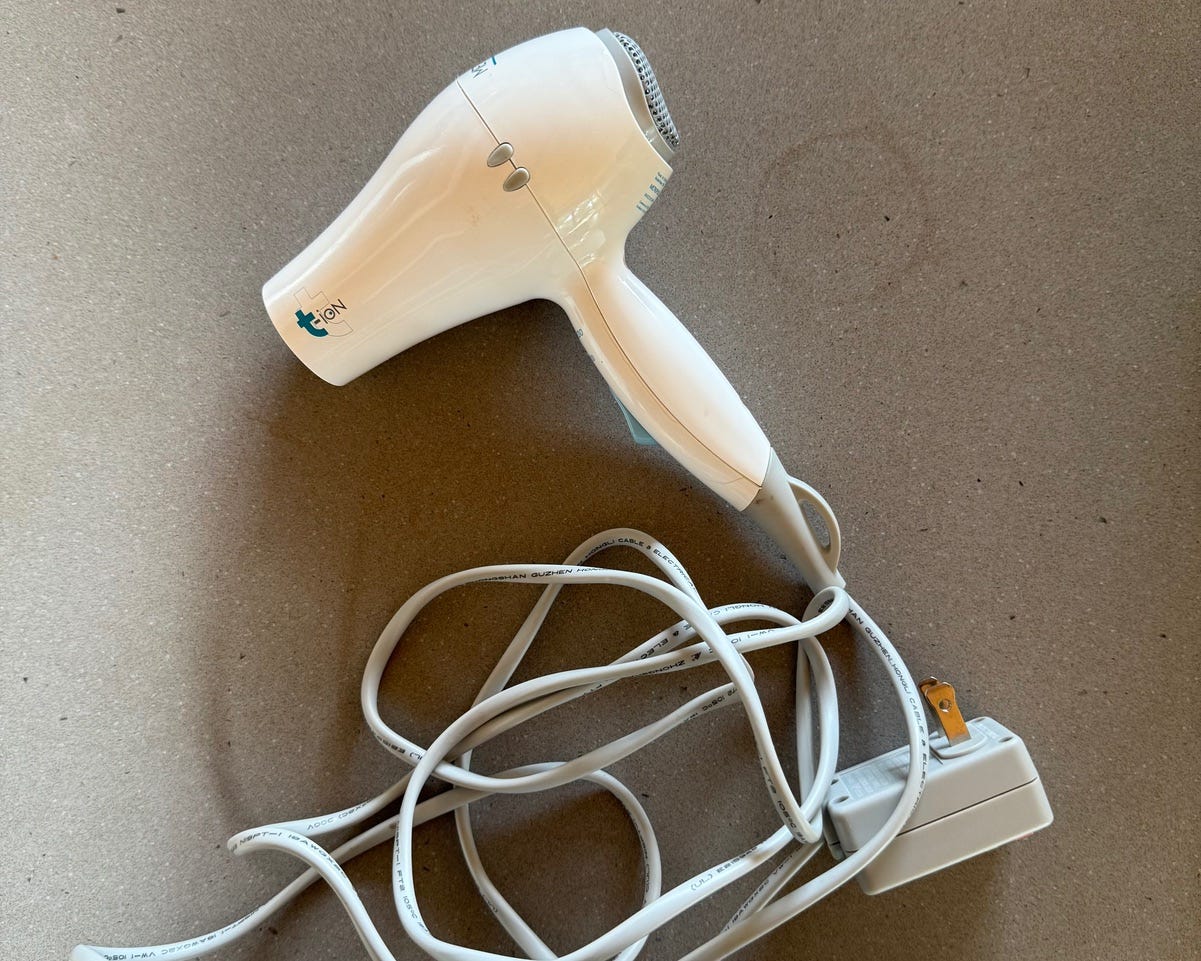
Saturdays were Mom’s hair-washing days. She let it hang loose to air dry, the only time I would see her hair down rather than curled into the everyday bun or the elaborate French twist that were her typical day and evening leaving-the-house styles. She didn’t have a blow dryer, and didn’t want to put her hair up until it was dry, so Saturdays after we moved to the U.S. from Tokyo, where Dad’s service as an Episcopal priest had brought our family in the 1960s, were also Mom’s bread-baking days.
The bread she baked was a classic 70s loaf, dense with whole wheat flour and wheat germ, sweetened lightly with honey, enriched with dry milk powder. She made three loaves a week for several years before she got a job, cut her hair, and bought a blow dryer. But in that sweet (for me) period when her work was primarily raising a family, she showed me how to bake bread. She made it look easy. Although sometimes I wanted more explicit instruction from her, with bread, she just did her thing and expected me to follow along. So I did.
She would pull the big yellow Pyrex mixing bowl down from the cupboard and stir together warm water, honey, and yeast. Once the mixture was bubbling, she’d add the flour, milk powder, and wheat germ, its vacuum-sealed jar cracking open with a satisfying whoosh. She set her rings on the windowsill to keep the stones—a diamond and a deep blue star sapphire in an intricate gold setting—from getting doughy while she kneaded. Sometimes I slid the rings onto my own fingers and stretched out my arm to admire them; sometimes I was more in the mood to punch and prod the dough. A few hours later, the kitchen warm and fragrant, she’d pull the loaves from the oven and cover them with one of Grandma’s faded tea towels, scolding me away from slicing the loaf warm. Even though I secretly longed to eat store-bought white sandwich bread, those comfortable Saturday mornings with my bread-baking Mom were a step on my path to cooking independence.
My firstborn, Ben, was a few weeks old when Mom and Dad came to visit us in San Francisco. Unlike friends whose moms sat impatient and distracted in hospital waiting areas, magazines open but ignored in their laps, or were even invited into delivery rooms, I had asked my parents to wait until we were a bit settled, until I was surer of myself as a mom. What I couldn’t anticipate was that their arrival would coincide with Ben being gripped by colic. Our house rang with sharp cries; I felt caged and exhausted. I started tracking my meals and Ben’s, trying to find a link between what I ate and what upset my baby, overwhelmed by the extra effort of trying to both diagnose and alleviate the discomfort. Gluten was suggested as a culprit, so I gave it up, crossing my fingers that it wouldn’t make a difference. It didn’t, and I was glad; devoted as I was to this unfamiliar new creature, I still couldn’t imagine being so self-sacrificing as to give up the deeply-rooted comfort of bread.
It would make a tidy story if Mom baked bread during that visit, reminding me of the pleasure it used to provide me, or if her presence gave me the time to bake bread. It wasn’t anything like that. But she commiserated. She held the baby a lot. She dosed Ben with gripe water when I couldn’t bring myself to put the dropper—the first thing Ben had tasted besides breast milk—into their wide, wailing mouth. She came along to the lactation consultant with me and fled with me just as quickly when she said Ben was tongue-tied and suggested having their frenulum snipped. Gripe water was hard enough; I couldn’t possibly surrender my tiny infant to a scalpel.
And then one morning, she blow-dried her hair and Ben stopped crying. She discovered an on/off switch we didn’t know Ben had, using an appliance that I, with curls so different from her hair, didn’t even own. When she left at the end of the week, she wrapped the cord around the little travel dryer and handed it off to me, knowing how essential it had become. My husband Tony and I got in the habit of taking it with us when we went to friends’ houses, pulling it out like a party trick: plug it in, turn it on, watch the baby drop to sleep. Eventually we bought a proper white noise machine which lived under Ben’s bed and traveled with us and helped the whole family sleep.
I learned to bake bread on easy Saturdays, watching Mom knead dough in a kitchen that smelled like honey and yeast, her rings glinting on the windowsill; I inherited the blow dryer in the midst of a less peaceful time. Neither gift announced itself, “This will help you mother.” But I can make three loaves on a weekend morning, and I know where the blow dryer is if I need it. Both are hers, and both are mine.

Caroline M. Grant is co-director, with her husband, of Sustainable Arts Foundation. She has published essays in the New York Times, Washington Post, Salon, and other outlets, and has co-edited two anthologies, The Cassoulet Saved Our Marriage: True Tales of Food, Family, and How We Learn to Eat (Roost Books, 2013) and Mama, PhD: Women Write About Motherhood and Academic Life (Rutgers University Press, 2008. She was editor-in-chief of LiteraryMama.com and has taught writing at UC Berkeley, Stanford, and the San Francisco Art Institute. She lives in San Francisco with her family.
Object-ives features flash nonfiction essays of 500-999 words on the possessions we can’t stop thinking about.
Recommended reading on possessions:
“Flowers Against Darkness” by Julia Bahar, Inhabitable Images
“Minimalism: A Love Story” by Jennie Young, Burned Haystack
“What Does Your Clutter Say About You?” by Claire Franklin, The Harmonious Home Approach
“The Full-Contact Sport of Estate-Sale Shopping” by Grace Yoon, The Wall Street Journal
“The Return of the Vanity” by Rukmini Callimachi, The New York Times

A blow dryer could stop colic? OMG! I dealt with a wailing baby for five full months! If only I'd taken the self care time to blow my hair dry! Wow...........
Beautiful true words. It reminded me of a story about my mom showing up at a friend's house when her baby was a newborn. She took the baby, sent Tracy to shower and rest then made a huge pot of lentil soup.